Injury prevention
Soccer Injury Prevention Exercises: Evidence-Based Protocols That Actually Work
Evidence-based soccer injury prevention exercises including Nordic curls, FIFA 11+, and Copenhagen adductors. Protocols, coaching cues, and programming.

Mario Jovanovic
S&C coach · 7 min read
Soccer Injury Prevention Exercises: Protocols That Actually Reduce Injuries
Injury prevention in soccer is not a warm-up routine you do before training and forget about. It is a training philosophy that runs through your entire program -- from exercise selection to load monitoring to how you structure the week.
The good news: we have strong evidence for what works. The bad news: most teams and players still do not implement it properly. The Nordic hamstring exercise has been shown to reduce hamstring injuries by 51%, yet adoption rates in professional football remain surprisingly low. At the grassroots and independent level, it is even worse.
This guide covers the most common soccer injuries, the evidence-based protocols proven to reduce them, how to coach the key exercises properly, and how to integrate prevention into your programming so it actually gets done.
The Most Common Soccer Injuries
Understanding injury patterns shapes your prevention strategy. Here is where soccer players break down.
Hamstring Strains
The most common muscle injury in soccer, accounting for 12-17% of all injuries. Most occur during high-speed running (late swing phase of sprinting) and have a high recurrence rate -- a player who strains their hamstring is 2-3x more likely to do it again.
Risk factors: Previous injury, age, high-speed running volume, low eccentric hamstring strength, acute training load spikes, inadequate warm-up.
Groin / Adductor Injuries
The second most common muscle injury, representing 9-14% of all injuries. Particularly prevalent during preseason when players suddenly increase kicking, sprinting, and change-of-direction volume after a break — which is why building eccentric adductor strength during the off-season is so important.
Risk factors: Previous groin injury, low adductor strength (especially relative to abductor strength), rapid increases in training volume, insufficient hip mobility.
ACL Injuries
Lower incidence than muscle injuries but far more severe -- 6-9 months of rehabilitation and a significant risk of re-injury. Most ACL injuries in soccer are non-contact, occurring during deceleration, cutting, or landing.
Risk factors: Female sex (2-6x higher risk), landing mechanics (knee valgus), quadriceps-dominant movement patterns, fatigue, playing surface, previous ACL injury.
Ankle Sprains
The most common acute injury in soccer. Previous ankle sprain is the single biggest risk factor, often leading to chronic instability when poorly rehabilitated.
Evidence-Based Protocols
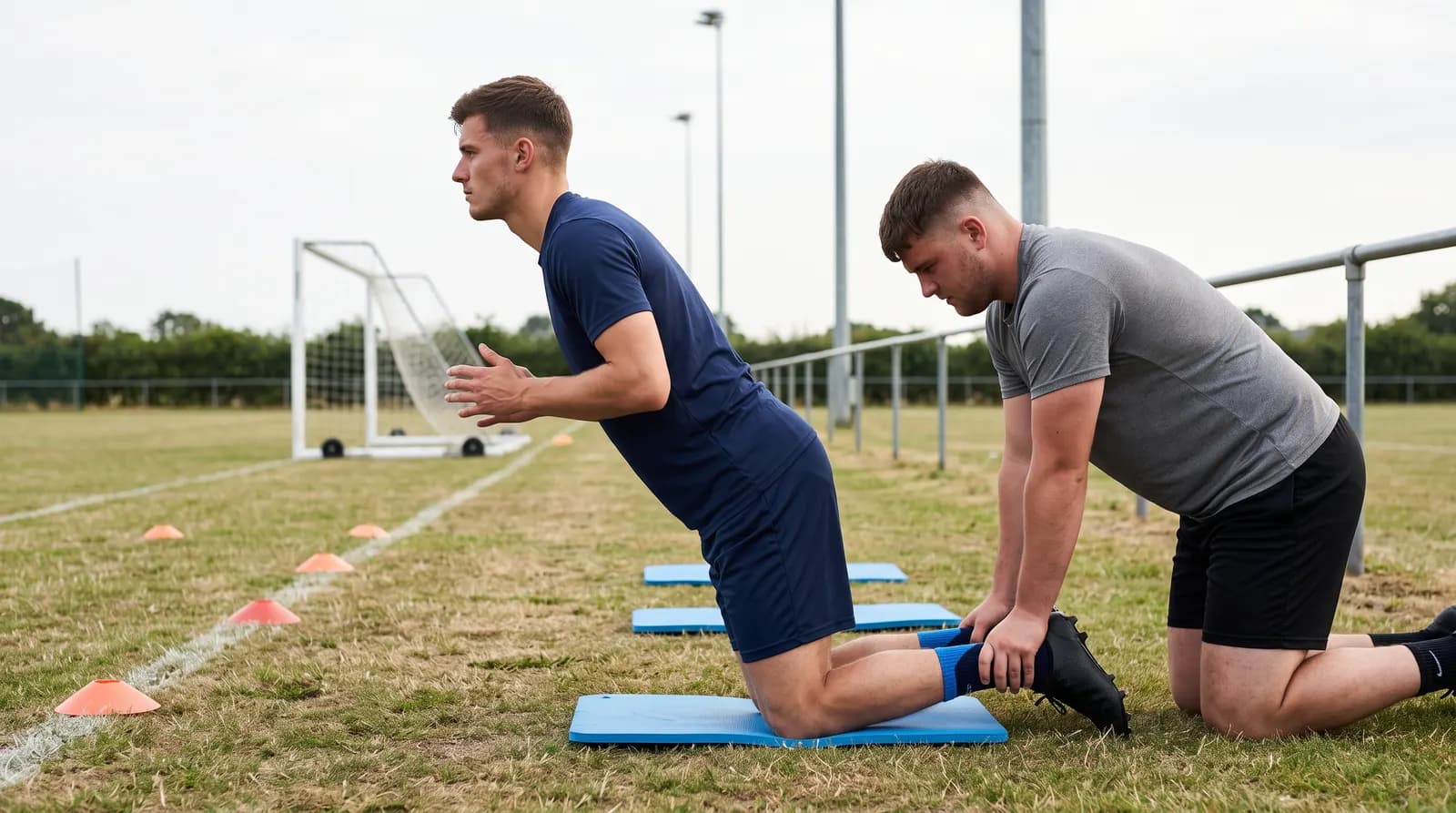
The Nordic Hamstring Protocol
What the evidence says: A meta-analysis by Al Attar et al. (2017) found that Nordic hamstring exercise programs reduce hamstring injury incidence by 51%. This is one of the strongest effect sizes for any injury prevention intervention in sport.
How it works: The Nordic hamstring curl develops eccentric hamstring strength -- the ability to resist lengthening under force. This is the exact demand placed on the hamstrings during the late swing phase of sprinting, when most strains occur.
The exercise:
Starting position: Kneeling on a pad, ankles secured by a partner or anchored under a sturdy surface. Body upright from knees to head.
Execution:
- Keeping hips extended (do not bend at the waist), slowly lower your torso toward the ground
- Control the descent as long as possible using your hamstrings
- When you can no longer control the fall, catch yourself with your hands and push back to the start
- The goal is to increase the range you can control over time
Coaching cues:
- "Stay tall through the hips -- straight line from knees to shoulders"
- "Fight gravity as long as you can. The slow part is the training."
- "Do not pike at the hips -- the moment you bend at the waist, hamstrings lose tension"
Programming:
- Pre-season build-up: Week 1: 2x3. Week 2: 2x5. Week 3: 3x5. Week 4: 3x6-8.
- In-season maintenance: 2-3 sets of 4-6 reps, twice per week. Place on MD-4 (furthest from match).
- Progression: Increase range of control before adding external load. Once a player can control the full range, add load with a weight plate held at the chest.
The Copenhagen Adductor Protocol
What the evidence says: The Copenhagen adductor exercise, studied as part of the Holmich protocol, has been shown to significantly reduce groin injury rates. Harroy et al. (2019) found a 41% reduction in groin problems when implemented with adequate volume.
The exercise:
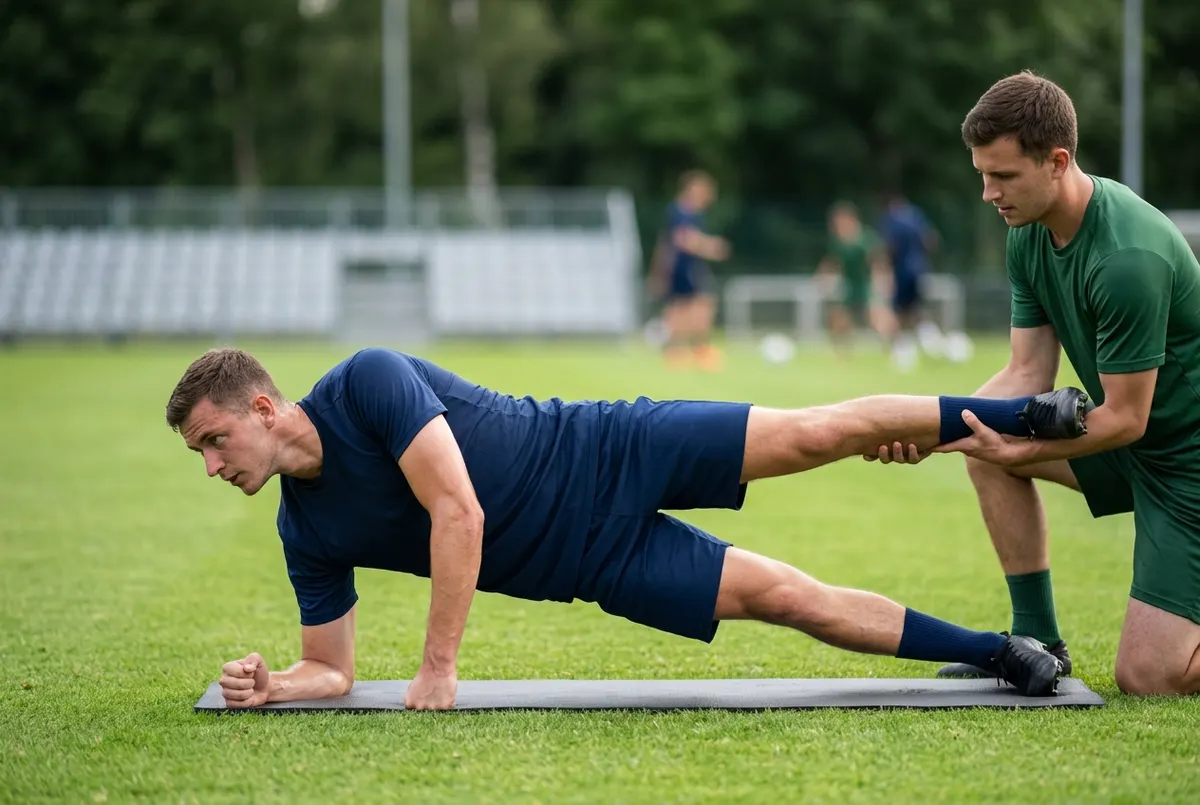
Starting position: Side plank position with top leg supported on a bench at mid-shin or knee height. Bottom leg hangs free.
Execution:
- Squeeze the top leg down into the bench while lifting the bottom leg up to meet it
- Hold for 1-2 seconds at the top
- Lower with control
- The adductors of the top leg work isometrically; the bottom leg works concentrically
Coaching cues:
- "Drive the top shin into the bench like you are trying to crush it"
- "Lift the bottom leg to meet the top. Control it -- do not swing"
- "Keep your body in a straight line. Do not let the hips sag"
- "If the full version is too hard, start with the knee on the bench instead of the shin"
Programming:
- Progression: Knee on bench (easiest) > mid-shin on bench > ankle on bench (hardest). Also progress from isometric holds to dynamic reps.
- Volume: Start with 2x5 each side, progress to 3x10-12.
- Placement: Superset with a lower body exercise (e.g., paired with Bulgarian split squats). This ensures it gets done and does not feel like an add-on.
FIFA 11+ Program
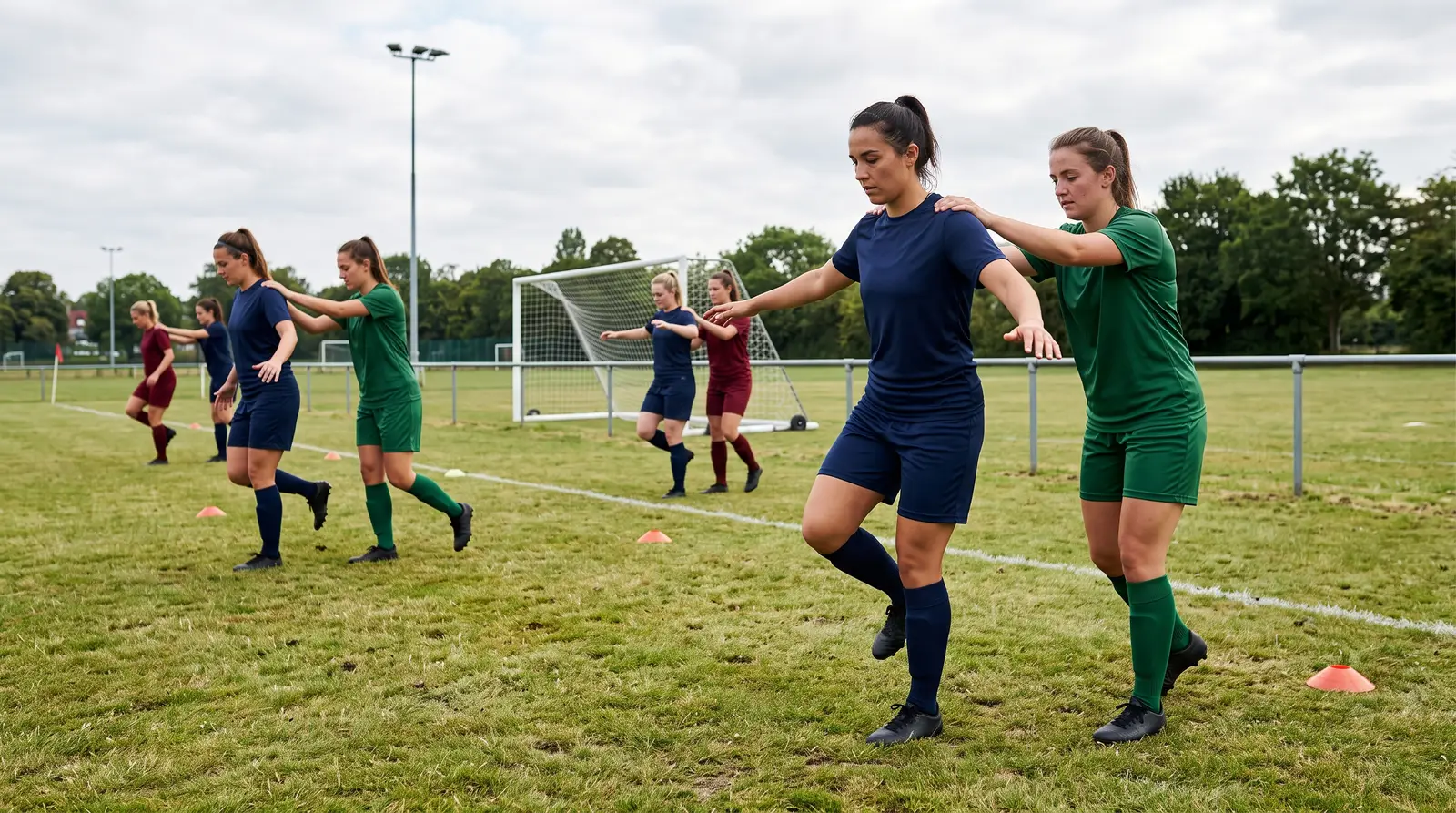
What the evidence says: The FIFA 11+ warm-up program has been studied extensively. A meta-analysis found it reduces overall injuries by 39% and serious injuries by 48% when implemented at least twice per week.
What it includes: Running exercises (8 min), strength and balance work (10 min), and sprint accelerations (2 min). Components include plank variations, single-leg balance, Nordic curls, and cutting movements.
The reality for S&C coaches: The FIFA 11+ is designed as a team warm-up replacement. If you are programming individual S&C sessions, you are probably already including these components in a more targeted way. For your own sessions, take the principles (eccentric hamstring work, balance training, neuromuscular control) and integrate them at appropriate doses.
Key Prevention Exercises With Coaching Cues
Beyond the formal protocols, these exercises should be staples in every soccer S&C program.
Single-Leg Romanian Deadlift
Purpose: Hamstring and glute strength, balance, hip stability.
Cues:
- "Hinge at the hip, not the low back. Your back leg and torso should move as one unit"
- "Reach the back leg behind you like you are trying to touch the wall behind you"
- "Keep the standing knee slightly bent -- not locked, not squatting"
- "The dumbbell travels straight down, close to the standing leg"
Sets/reps: 3x8 each leg. Start unloaded, progress to dumbbell, then kettlebell.
Single-Leg Glute Bridge
Purpose: Glute activation, hamstring engagement, pelvic stability.
Cues:
- "Drive through the heel, not the toes"
- "Squeeze the glute at the top. Hold for two seconds"
- "Keep the hips level -- do not let the free side drop"
Sets/reps: 3x10 each side. Progress to foot-elevated, then add load.
Lateral Band Walk
Purpose: Gluteus medius activation, knee stability, ACL injury risk reduction.
Cues:
- "Stay low in a quarter-squat position throughout"
- "Push the knees out against the band -- do not let them cave in"
- "Small, controlled steps. Keep feet parallel"
Sets/reps: 2x15 steps each direction. Use as part of warm-up or activation circuit.
Single-Leg Squat to Box
Purpose: Knee control, quad and glute strength, landing mechanics.
Cues:
- "Sit back and down to the box. Control the descent for three seconds"
- "Watch your knee -- it should track over your toes, not collapse inward"
- "Stand up in one strong push. No rocking or bouncing off the box"
Sets/reps: 3x6 each leg. Lower the box height as strength improves.
Calf Raise (Seated and Standing)
Purpose: Soleus and gastrocnemius strength, ankle stability, Achilles tendon resilience.
Cues:
- "Full range of motion -- all the way down, pause, all the way up, pause at the top"
- "Three seconds up, two-second hold at the top, three seconds down"
- "Do not bounce at the bottom. Control every millimetre"
Sets/reps: 3x12-15. Both bent-knee (soleus) and straight-knee (gastroc) variations.
Integrating Prevention Into Your Programming
The biggest mistake in injury prevention is treating it as something separate from training. "Prehab" routines given as homework do not get done. Warm-up protocols get skipped when the session runs long. Prevention exercises tacked on at the end get cut when players are tired.
The fix: make prevention the program.
- Nordic hamstring curls are not prehab. They are a posterior chain exercise. Programme them alongside RDLs and hip thrusts.
- Copenhagen adductors are a groin strengthening exercise. Superset them with your split squats.
- Single-leg balance work is a lower body exercise. Include it in your warm-up circuit, not as an optional extra.
- Calf raises are a strength exercise. They get their own slot in the session.
When prevention is embedded in the program, it gets done. When it is an afterthought, it does not.
Monitoring for Early Warning Signs
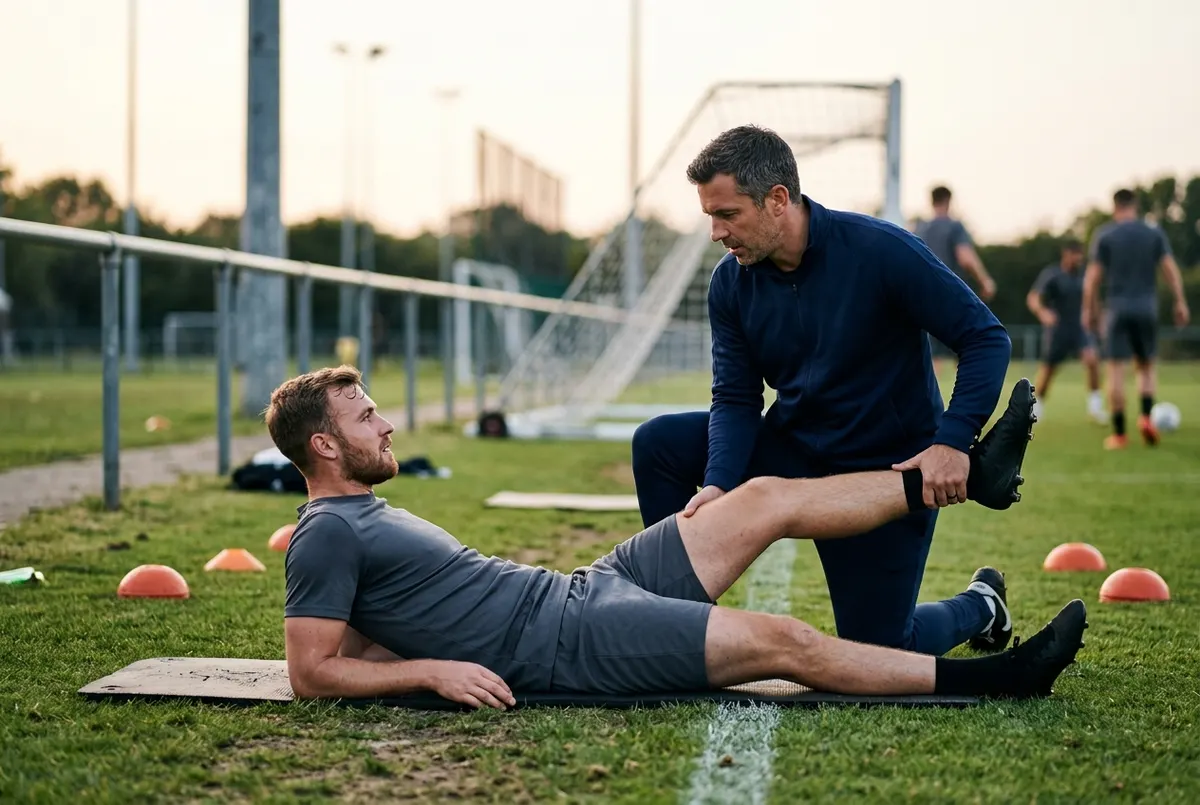
Prevention is not just about exercises. It is about catching problems before they become injuries.
Wellness Data
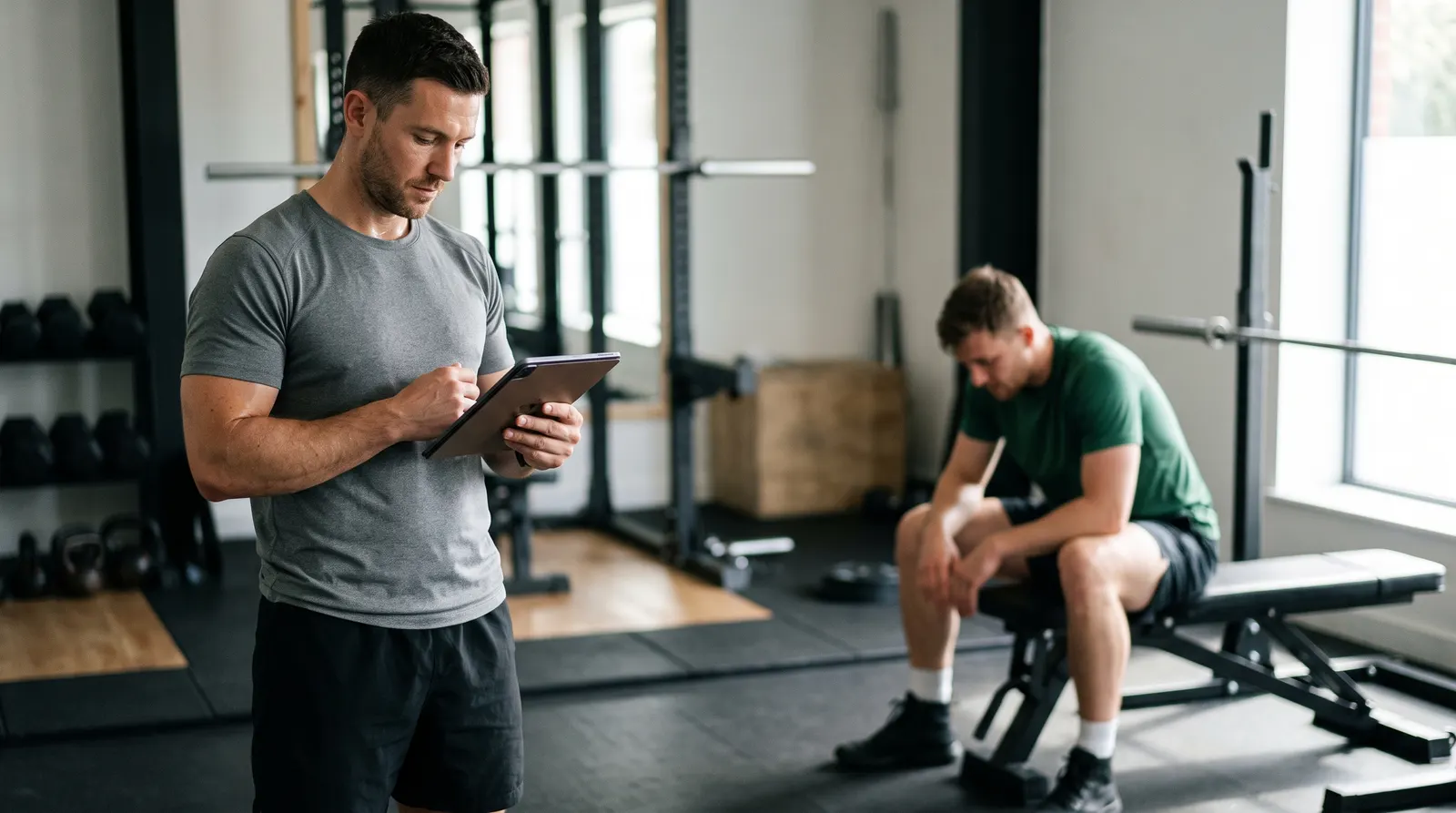
Track sleep quality, energy, soreness, stress, and mood. Patterns matter more than individual data points. A player who reports elevated soreness and poor sleep for three consecutive days is at higher risk than one who has a single bad night.
Training Load Monitoring
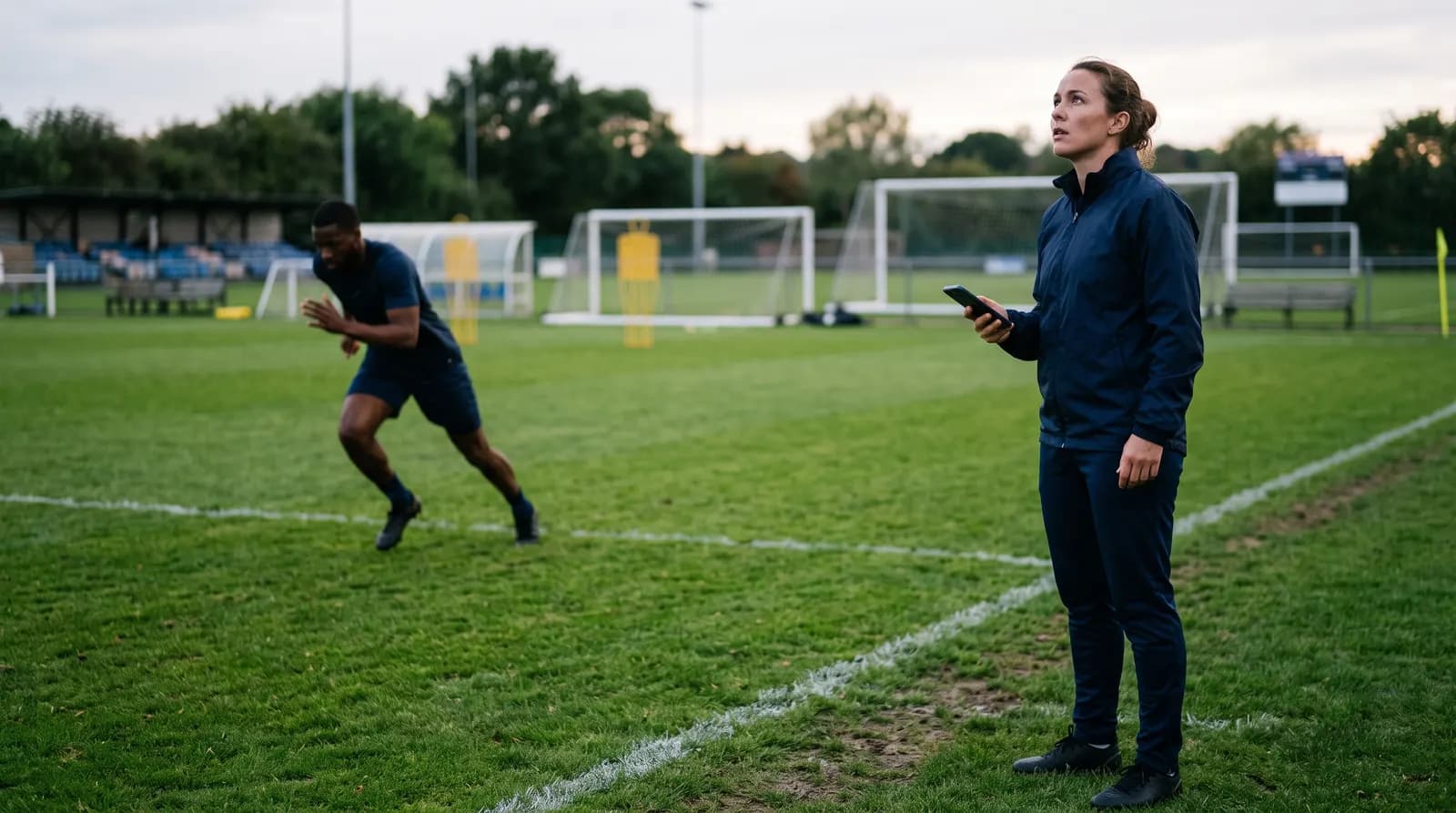
The acute:chronic workload ratio (ACWR) is your best objective tool. Injury risk increases significantly when the ACWR exceeds 1.5 -- meaning the player's recent load is 50% higher than their average load. This typically happens after:
- Return from holidays or injury
- Fixture congestion (multiple matches in a week)
- A sudden increase in club training intensity
- Adding conditioning work on top of heavy match schedules
What to Watch For
- Hamstring tightness after sprinting that does not resolve with normal recovery
- Groin discomfort during kicking or lateral movements -- early adductor issues present as vague discomfort, not sharp pain
- Knee pain during deceleration or landing -- especially in female players
- Player consistently reporting high soreness or low energy -- systemic fatigue increases injury risk across the board
When you spot these patterns, modify: reduce load, adjust exercise selection, increase recovery time, and communicate with the player and their club.
Tracking wellness data, monitoring ACWR, and embedding prevention exercises into structured programs is exactly what PlayerPlan is built for. Your players check in with a 30-second wellness survey, you see their load trends and readiness, and the session builder makes it easy to programme Nordics and Copenhagens right alongside your main lifts. Try it free for 30 days at player-plan.com.
Ready to ditch the spreadsheets?
Session building, periodization, load monitoring and no-login player sharing — built for football S&C coaches.
Start your free 30-day trialPro features, AI included. No credit card.