Programming
Off-Season Training for Football: Build the Engine Before the Season
How to design an off-season training program for football players. Phase structure, exercise selection, volume progression, and a sample 8-week template.

Mario Jovanovic
S&C coach · 10 min read

Off-Season Training for Football: Build the Engine Before the Season
You have 6-8 weeks. That is the entire window between the final whistle of the season and the first day of pre-season -- and it is the single most important training block in a footballer's year. Every physical quality that separates a player who dominates in April from one who fades in February gets built right here, during an off-season training program for football that nobody outside your gym will ever see.
Miss this window and you spend the entire in-season period trying to build qualities that should already be in place. And in-season, the best you can do is maintain.
Here is how to structure off-season training for football: split the block into three phases -- general preparation (3 weeks of rebuilding work capacity and addressing weaknesses), specific preparation (3 weeks of building maximal strength and introducing power), and a pre-season bridge (2 weeks of tapering volume while maintaining intensity). Conditioning shifts from aerobic-dominant early on to football-specific repeated sprint ability by the end. The entire block should ramp in during Week 1 and taper down in Weeks 7-8 so the player arrives at pre-season fresh, not fatigued.
That is the framework. Below is the full breakdown -- assessment, phase-by-phase programming, exercise selection, the mistakes that ruin off-seasons, and how to keep players compliant when they are on a beach somewhere.
Why Off-Season Strength Training for Soccer Players Matters
During the season, the match schedule dictates everything. You program around games, manage fatigue, and accept that 2 gym sessions per week is often the ceiling. Volume stays low. Intensity is capped by what the player can recover from alongside 4-6 club sessions per week.
The off-season flips this entirely:
- No match interference. You control the training week.
- Recovery is not a bottleneck. Players can absorb more volume because they are not accumulating match fatigue.
- You can address weaknesses. The imbalances and deficits you identified during the season -- single-leg strength asymmetries, poor hip mobility, aerobic base erosion -- can be fixed.
- Hypertrophy is possible. Players who need muscle mass can do the higher-volume work that the in-season period does not allow.
- Connective tissue adaptation. Tendons and ligaments respond to progressive overload on longer timescales than muscle. The off-season gives you the weeks of consistent loading they need to adapt, reducing injury risk when pre-season intensity ramps up.
This is the window where real physical development happens. Everything else in the year is about maintaining or expressing what you built here.
For a deeper look at how the off-season fits into a full annual plan, see the complete season periodization breakdown.
Before You Start -- Baseline Assessment
Before writing a single session, I spend the first day running a quick screen with every player. Nothing elaborate -- 15 to 20 minutes that tells me where they are physically and what the season left behind.
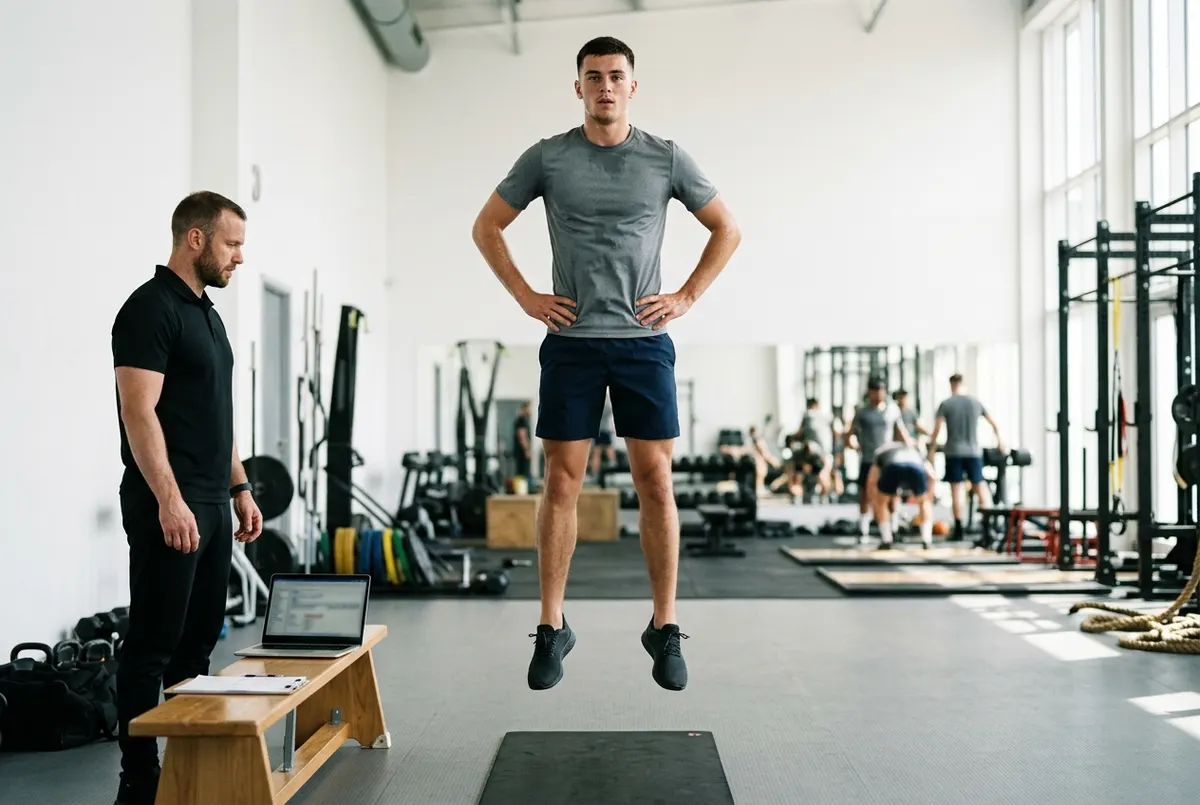
- Movement quality: Overhead squat, single-leg squat, hip hinge pattern. I am looking for asymmetries, compensations, and range of motion restrictions that need addressing in Phase 1.
- Strength baselines: Estimated working loads for key lifts (back squat, trap bar deadlift, bench press). If you do not have recent 1RM data, use a 5RM test and calculate from there, or programme by RPE.
- Injury inventory: What niggles did they carry through the end of the season? Groin tightness? Knee irritation? Chronic hamstring issues? This shapes exercise selection and loading in the first two weeks.
- Body composition check: Simple bodyweight and visual assessment. Some players arrive 2-3kg heavier after their break. That is fine -- it informs calorie and conditioning conversations.
This screen takes minimal time but saves you from programming blind. A player who tweaked their ankle in the last match of the season needs a different Week 1 than someone who finished injury-free.
Phase 1 -- General Preparation (Weeks 1-3): Rebuild the Foundation
Goal: Rebuild work capacity, address imbalances, add muscle where needed.
After a long season -- and often a 2-3 week break after that -- most players arrive deconditioned. Maybe they lost hamstring strength. Maybe their aerobic base dropped. Maybe they need to move well again after months of accumulating minor niggles and then doing nothing for two weeks.
Phase 1 is about building the foundation. Higher volume, moderate intensity, broad exercise selection. But here is the critical point: Week 1 is a ramp-in, not a full assault. Players who have been on holiday are not ready for 4 hard sessions in their first week back. I start Week 1 at reduced volume (2-3 sets instead of 3-4) and build across the three weeks.
Training parameters:
- Frequency: 3-4 sessions per week (3 in Week 1, building to 4 by Week 3)
- Volume: Week 1: 2-3 sets of 8-12 reps. Weeks 2-3: 3-4 sets of 8-12 reps (hypertrophy), 3-4 sets of 6-8 reps (strength movements)
- Intensity: 60-70% 1RM in Week 1, progressing to 68-75% by Week 3. Or RPE 6-7 building to RPE 7-8.
- Conditioning: 2-3 sessions of aerobic-dominant work (tempo runs at 70-80% HRmax, cycling, swimming)
- Prehab: Every session includes 10-15 minutes of dedicated injury prevention work
Sample Week -- Phase 1 (Week 2-3 Template):
Day 1 -- Lower Body (Strength + Hypertrophy)
- A1: Back squat -- 4x8 @ 70% 1RM (RPE 7)
- B1: Romanian deadlift -- 3x10 @ RPE 7
- B2: Copenhagen adductor raise -- 3x8 each side
- C1: Walking lunge -- 3x10 each leg
- C2: Single-leg calf raise -- 3x12 each
- Prehab: Banded hip circuit -- 2x10 each direction
Day 2 -- Upper Body + Core
- A1: DB bench press -- 3x10 @ RPE 7
- A2: Barbell bent-over row -- 3x10 @ RPE 7
- B1: DB shoulder press -- 3x10
- B2: Chin-up -- 3x8 (add band assistance if needed)
- C1: Pallof press -- 3x10 each side
- C2: Dead bug -- 3x8 each side
- C3: Farmer's carry -- 3x30m
Day 3 -- Lower Body (Posterior Chain Focus)
- A1: Trap bar deadlift -- 4x6 @ 72% (RPE 7-8)
- B1: Nordic hamstring curl -- 3x5 (slow eccentric, 3-4 second lowering)
- B2: Barbell glute bridge -- 3x12
- C1: Step-up -- 3x8 each leg
- C2: Banded lateral walk -- 3x12 each direction
- Prehab: Ankle mobility + calf complex -- 2 rounds
Day 4 -- Full Body + Conditioning
- A1: Goblet squat -- 3x10
- A2: Push-up variations -- 3x12
- B1: Single-leg RDL -- 3x8 each leg @ RPE 7
- B2: Band pull-apart -- 3x15
- Conditioning: 4x4min @ 80-85% HRmax with 3min active rest (jogging). This is a classic 4x4 Norwegian-style interval for aerobic power.
The conditioning in this phase is intentionally aerobic-dominant. You are rebuilding the aerobic engine that erodes over a long season of repeated sprints and match-day stress. Research consistently shows that a strong aerobic base underpins repeated sprint ability -- the quality that matters most in football. Save the high-intensity interval work for later.
Phase 2 -- Specific Preparation (Weeks 4-6): Build Strength and Power
Goal: Shift from general fitness toward football-specific qualities. Build maximal strength and introduce power.

Volume comes down. Intensity goes up. The exercises become more specific -- more single-leg work, more explosive movements, more demand on the neuromuscular system. This is where the work from Phase 1 starts to pay off. The connective tissue has readapted, the movement patterns are grooved, and now you can push load.
Training parameters:
- Frequency: 3-4 sessions per week
- Volume: 3-4 sets of 4-6 reps (strength), 3-4 sets of 3-5 reps (power)
- Intensity: 78-88% 1RM for compound lifts (RPE 8-9)
- Conditioning: 1-2 sessions, shifting toward mixed energy system work (high-intensity intervals, tempo-change runs)
- Power introduction: Loaded jumps, hang cleans, plyometrics (start with low volume -- 2-3 sets of 3-5 reps -- and build)
Sample Week -- Phase 2:
Day 1 -- Maximal Strength (Lower)
- A1: Back squat -- 4x5 @ 82% (RPE 8-9)
- B1: Bulgarian split squat -- 3x5 each leg @ loaded (RPE 8)
- B2: Nordic hamstring curl -- 3x5 (controlled eccentric)
- C1: Barbell hip thrust -- 3x6 @ RPE 8
- C2: Pallof press -- 3x10 each side
- Prehab: Copenhagen adductor hold -- 3x20s each side
Day 2 -- Power + Upper
- A1: Hang clean -- 4x3 @ 70-75% (focus on speed and technique, not grind)
- B1: DB bench press -- 3x6 @ RPE 8
- B2: Weighted chin-up -- 3x5 @ RPE 8
- C1: Landmine press -- 3x8 each arm
- C2: Face pull -- 3x15
- Plyometrics: Hurdle hops -- 3x5 (60-70cm hurdle, stick each landing)
Day 3 -- Strength + Posterior Chain
- A1: Trap bar deadlift -- 4x4 @ 85% (RPE 8-9)
- B1: Rear-foot-elevated split squat -- 3x6 each leg
- B2: Glute-ham raise -- 3x6
- C1: Sled push -- 4x20m (heavy, 6-8 RPE)
- C2: Anti-rotation cable press -- 3x8 each side
- Prehab: Single-leg balance work -- 2x30s each side
Day 4 (optional) -- Speed + Conditioning
- Sprint work: 6x30m with full recovery (walk back + 90s rest). Cue acceleration mechanics -- forward lean, drive phase, arm action.
- Conditioning: 6x1min @ 90% HRmax with 1min active rest (high-intensity repeated efforts)
- Mobility circuit: 15 minutes (hip flexor, thoracic spine, ankle)
Notice the shift. Reps are lower, loads are heavier, and power movements appear. The player is converting the work capacity they built in Phase 1 into the strength and explosiveness they need on the pitch. One thing I always watch for at the Phase 1 to Phase 2 transition: if a player's technique breaks down under the heavier loads, they are not ready. Drop the intensity 5% and build back up. Chasing numbers at the expense of quality is how injuries happen.
Phase 3 -- Pre-Season Bridge (Weeks 7-8): Taper and Prepare
Goal: Reduce gym volume, integrate conditioning, prepare the body for the demands of pre-season.
This is where a lot of coaches get it wrong. They push hard right up to the start of pre-season, and the player arrives already fatigued. Phase 3 is a deliberate taper -- you are shedding fatigue so the player can express the fitness they have built.
Think of it this way: the strength is in the bank. You deposited it during Phases 1 and 2. Phase 3 is about making sure the player can withdraw it when it matters.
Training parameters:
- Frequency: 2-3 sessions per week (never more than 3)
- Volume: 2-3 sets of 3-5 reps (drop volume by 30-40% from Phase 2, but maintain intensity)
- Intensity: 80-88% 1RM (RPE 8-9). Keep the loads heavy -- this is what preserves the strength adaptations. You cut volume, not intensity.
- Conditioning: Football-specific -- repeated sprint ability, change of direction, mixed-intensity running that mimics match demands
- Speed work: Short sprints (10-30m), acceleration drills with full recovery
Sample Week -- Phase 3:
Day 1 -- Strength Maintenance
- A1: Back squat -- 3x4 @ 82% (RPE 8)
- B1: Bulgarian split squat -- 2x5 each leg
- B2: Nordic hamstring curl -- 2x5
- C1: Core circuit: Pallof press 2x8 + dead bug 2x8 + side plank 2x20s each
Day 2 -- Power + Speed
- A1: Hang clean or loaded jump squat -- 3x3 (maximal intent on every rep)
- Sprint work: 4x20m + 3x30m with full recovery (3-4 minutes between efforts)
- Plyometrics: Drop jump from 30cm box -- 3x4 (focus on reactive stiffness, minimal ground contact time)
- Conditioning: Repeated sprint ability -- 3 sets of 6x20m sprints, 20s rest between reps, 3min rest between sets. This directly mimics the repeated high-intensity demands of match play.
Day 3 (optional) -- Light Full Body
- A1: Trap bar deadlift -- 2x4 @ 78% (RPE 7-8)
- A2: DB bench press -- 2x8 @ RPE 7
- B1: Single-leg RDL -- 2x6 each leg
- B2: Band pull-apart -- 2x15
- Finish: 10 min easy aerobic flush (cycle or light jog)
The player should arrive at pre-season feeling sharp, strong, and ready to handle the high volume of running that the first week of pre-season always brings. Not tired. Not sore. Ready. I tell my players: if you feel like you could do more in the final week, that means we got the taper right.
For what comes next after this bridge phase, see the in-season training guide.
The 8-Week Soccer Off-Season Workout Plan at a Glance
| Phase | Week | Gym Sessions | Primary Focus | Sets x Reps | Intensity (%1RM / RPE) | Conditioning |
|---|---|---|---|---|---|---|
| 1 -- General Prep | 1 | 3 | Ramp-in, movement quality, prehab | 2-3 x 10-12 | 60-68% / RPE 6-7 | 2x aerobic (tempo runs, cycling) |
| 2 | 4 | Work capacity, hypertrophy | 3-4 x 8-12 | 65-72% / RPE 7 | 2-3x aerobic (4x4min intervals) | |
| 3 | 4 | Hypertrophy, strength endurance | 3-4 x 6-10 | 68-75% / RPE 7-8 | 2-3x aerobic (4x4min intervals) | |
| 2 -- Specific Prep | 4 | 4 | Max strength, power introduction | 3-4 x 4-6 | 78-85% / RPE 8 | 1-2x mixed (HIT intervals) |
| 5 | 3-4 | Strength + power development | 3-4 x 4-6 | 80-88% / RPE 8-9 | 1-2x mixed (tempo-change runs) | |
| 6 | 3-4 | Power emphasis, speed introduction | 3-4 x 3-5 | 82-88% / RPE 8-9 | 1x speed + 1x mixed intervals | |
| 3 -- Pre-Season Bridge | 7 | 3 | Maintain strength, express power | 2-3 x 3-5 | 80-85% / RPE 8 | 1-2x RSA + speed work |
| 8 | 2 | Taper, speed, match-prep conditioning | 2-3 x 3-5 | 80-85% / RPE 8 | 1x RSA or small-sided games |
How to read this table: Volume drops progressively across the 8 weeks while intensity climbs. Conditioning shifts from pure aerobic (Phase 1) to mixed energy systems (Phase 2) to football-specific repeated sprint ability (Phase 3). The final week should feel easy in the gym -- that is the point.
This template is a starting point. Adjust it based on the individual player -- their training history, injury profile, position demands, and how much time they have.
Building this in software: PlayerPlan's Program Designer lets you lay out all 8 weeks with phase labels, volume targets, and intensity zones per week. Drag sessions into the weekly grid, assign exercises, and publish the whole block to the player in one go. Players access the full program from their phone via a sharing link -- no app download, no login -- which means they can follow the plan even when they are on holiday in another country. It handles the periodization structure so you can focus on the programming decisions.
Exercise Selection for Your Off-Season Training Program
Not all exercises are equal for footballers. Your soccer off-season workout plan should prioritise qualities that transfer directly to match performance and injury resilience. Here are the categories I build every off-season program around, in order of priority.
Posterior Chain -- Non-Negotiable
Hamstring injuries remain the most common muscle injury in football, accounting for roughly 12-16% of all injuries in elite players. The off-season is where you build the eccentric hamstring strength that protects players during the season.
- Nordic hamstring curls -- the single most evidence-supported exercise for hamstring injury reduction. The NHE has been shown to reduce hamstring injury incidence by up to 51% in meta-analyses. I programme these year-round, but the off-season is where you build the eccentric strength base. Start with 3x5 slow eccentrics in Phase 1, progress to 3x6 full range in Phase 2.
- Romanian deadlifts and single-leg variations -- hip-dominant hamstring loading at longer muscle lengths. The single-leg version also challenges pelvic stability, which matters for sprinting and change of direction.
- Glute bridges and hip thrusts -- hip extension strength drives sprint speed. Barbell hip thrust is the primary loaded variation; single-leg glute bridge for prehab and activation.
- Glute-ham raises -- if you have access to the equipment, these provide both knee flexion and hip extension demand in one movement.
For a full look at posterior chain and injury prevention programming, see the exercise selection guide for soccer S&C.
Single-Leg Work -- Train How They Play
Football is a single-leg sport. Sprinting, cutting, kicking, decelerating -- it all happens on one leg. Your program needs to reflect this. I programme at least one single-leg lower body movement per session across the entire off-season.
- Bulgarian split squats -- staple across all three phases. Phase 1: goblet-loaded, 3x8 each. Phase 2: barbell-loaded, 3x5 each at RPE 8. Phase 3: maintain load, drop to 2x5.
- Step-ups -- functional single-leg strength with less spinal load than bilateral squats. Use a box height that puts the hip crease at or below knee level.
- Single-leg RDLs -- hip hinge pattern with balance and stability demands. Excellent for hamstring and glute development while training proprioception.
- Lateral lunges -- frontal plane work that most programs neglect. Football players change direction constantly, and lateral lunge strength protects against adductor injuries.
Upper Body -- Underrated for Footballers
Upper body strength matters more than most football S&C coaches give it credit for. Shielding the ball, winning aerial duels, holding off defenders, absorbing contact -- all require upper body strength and robustness. Research on physical match demands shows that elite players engage in 40-60 physical duels per game, the majority involving upper body contact.
Goalkeepers especially need dedicated upper body work: shoulder stability for diving, pressing strength for distribution under pressure, and grip strength for handling crosses in traffic.
- Bench press / DB press variations -- horizontal push. I alternate between barbell and dumbbell across phases to get the stability benefits of DBs and the loading potential of the barbell.
- Rows and chin-ups -- pulling volume should at least match pushing volume to prevent shoulder issues. I run a 1.5:1 pull-to-push ratio in Phase 1 to correct any imbalances from the season.
- Shoulder press -- overhead strength and stability. Standing DB press adds a core stability demand.
- Face pulls and band work -- posterior shoulder health. High-rep, every session. Not glamorous, but they keep shoulders healthy across a career.
Core -- Anti-Movement, Not Crunches
Football core training is about resisting unwanted movement, not creating it. Anti-extension, anti-rotation, and anti-lateral flexion are the patterns that transfer to the pitch. When a player shields the ball or absorbs a challenge at pace, their core is working to prevent displacement -- not to flex or rotate.
- Pallof press -- anti-rotation under load. Progress by increasing band tension or cable weight, or by moving to a half-kneeling or tall-kneeling stance.
- Dead bugs -- anti-extension with coordination. The contralateral limb movement pattern directly relates to running mechanics.
- Side plank variations -- anti-lateral flexion. Also important for adductor health -- the Copenhagen variation doubles as a groin strengthening exercise.
- Loaded carries -- farmer's walks, suitcase carries, overhead carries. Whole-body stability under load and moving. Underrated for footballers.
Common Pre-Season Preparation Mistakes That Ruin an Off-Season
1. Doing Too Much Too Soon
This is the mistake I see most often. Players return from their break deconditioned -- sometimes 2-3 weeks of minimal activity -- and the coach programmes Week 1 like it is Week 4. Ligaments, tendons, and connective tissue need time to readapt to loading. Collagen turnover takes weeks, not days.
Phase 1 exists for a reason, and within Phase 1, Week 1 is a deliberate ramp-in. Start with 2-3 sets instead of 4, use loads at 60-68% instead of 70-75%, and let the body readapt. I have seen too many players develop patellar tendinopathy or hamstring strains in the first 10 days of an off-season program because the coach treated the first week like the third.
2. Neglecting Conditioning Entirely
Some coaches treat the off-season as pure gym work and ignore conditioning until pre-season. The player arrives at pre-season with great squat numbers but cannot survive the first week of running.
Conditioning should be present throughout the off-season -- aerobic-dominant in Phase 1, mixed in Phase 2, football-specific in Phase 3. The aerobic base you build in Phase 1 directly supports recovery between high-intensity efforts and between sessions. A well-conditioned player adapts faster and recovers faster from everything else you program.
3. Not Tapering Into Pre-Season
Phase 3 is not optional. If you run a 6-week off-season program at full volume and the player starts pre-season the next day, you are stacking fatigue on top of fatigue. Pre-season is already brutal -- high running volumes, double sessions, and competitive pressure from day one.
Drop volume by 30-40% in the final two weeks while maintaining intensity. The strength is already built -- you are shedding the fatigue so the player can access it. I target a 30% volume reduction in Week 7 and 40-50% in Week 8 relative to peak volume in Weeks 4-5.
4. Programming Without Knowing the Player's Schedule
The off-season is not a vacuum. Players travel, go on holiday, attend family events. If you write an 8-week program assuming 4 sessions per week and the player is on a beach for 2 of those weeks, you have a 6-week program with a 2-week gap in the middle.
Ask the player upfront: when are you away? When can you access a gym? What equipment will you have? Build the program around reality, not an ideal scenario. I send every player a one-page questionnaire before the off-season starts: travel dates, gym access, equipment, any pain or injuries they are carrying. Five minutes of planning prevents five weeks of frustration.
5. Skipping the Aerobic Base
This is related to mistake two but deserves its own section. Some coaches jump straight to high-intensity interval training because it feels more "football-specific." But repeated sprint ability -- the quality that determines in-game fitness -- is built on top of aerobic capacity. A player with a poor aerobic base will recover slower between sprints, between drills, and between sessions. Phase 1 aerobic work is not old-fashioned. It is the foundation everything else is built on.
Keeping Players Compliant Through the Off-Season
Here is the truth about off-season training: the programme is only as good as the player's adherence. And adherence drops off a cliff when players are on holiday, away from their routine, and not feeling the competitive pressure of the season. I have had players who were the most dedicated trainers during the season go completely silent for three weeks in July.
Set Realistic Expectations
If a player is travelling for three weeks and only has access to a hotel gym, do not send them a program that requires a squat rack, bumper plates, and a cable machine. Write a travel-friendly version with dumbbells, bodyweight, and bands. Two sessions per week with limited equipment beats zero sessions per week with an ideal program.
Here is a minimal travel session I give to players who are away with limited equipment:
Travel Session (30-35 min, hotel gym or bodyweight):
- A1: DB goblet squat or bodyweight squat -- 3x12
- A2: Push-up variation (elevated feet, tempo, or deficit) -- 3x12
- B1: DB single-leg RDL or bodyweight single-leg hip hinge -- 3x8 each
- B2: DB row or inverted row -- 3x10 each
- C1: Reverse lunge -- 3x10 each
- C2: Plank -- 3x30s
- D1: Nordic curl regression (using bed frame or partner) -- 3x5 eccentric
Is this optimal? No. But it maintains movement patterns, keeps the player honest, and ensures they do not arrive back at Week 5 having done nothing for three weeks.
Make It Accessible
Players are not going to open a PDF, scroll to week 4, and figure out what they are supposed to do. They need the program on their phone, easy to follow, session by session.
Practical tip: PlayerPlan's player sharing links give each player a direct link to their program on their phone -- no app download, no login required. They open the link, see today's session, and get to work. When your players are scattered across different countries during the off-season, this removes the friction that kills compliance.
Check In Regularly
A weekly message asking how training is going does more for compliance than a perfectly designed program. If you see a player has not logged a session in 10 days, reach out. Sometimes all it takes is knowing someone is watching. I schedule a 5-minute check-in call or voice note with each player every Monday during the off-season. It costs me very little and doubles compliance rates. I share more programming insights and compliance strategies on mjperform.com.
Build in Flexibility
Give players permission to shift sessions around. If Monday does not work, do it Tuesday. If they miss a session, do not make them feel like the whole programme is ruined. Consistency over perfection. I tell players: "Three sessions done imperfectly is better than four sessions planned perfectly but only two completed."
Adjusting for Position
Not every player needs the same off-season emphasis. While the three-phase structure stays the same for everyone, the exercise selection and volume distribution within each phase should reflect positional demands.
Goalkeepers need more upper body and shoulder work than outfield players. I add an extra upper body session per week in Phase 1 and Phase 2, with emphasis on shoulder stability (Turkish get-ups, bottoms-up KB press), reactive power (med ball throws, lateral bounds), and grip strength. Their conditioning is different -- shorter, more explosive efforts (5-15m) with full recovery, plus lateral movement drills that mimic diving and shot-stopping.
Centre-backs and full-backs benefit from extra emphasis on aerial strength (upper body pressing and pulling, vertical jump power), deceleration work (eccentric loading, drop landings), and the ability to handle repeated high-speed efforts in transition. Full-backs in particular run more high-speed distance than almost any other position, so their Phase 1 aerobic base work matters enormously.
Central midfielders typically need the strongest aerobic base. They cover the most total distance during matches (10-13km average), so aerobic capacity work in Phase 1 is especially important. I add an extra conditioning session per week for midfielders in Phase 1 and keep conditioning volume slightly higher throughout. Their gym work can lean more toward strength endurance than pure maximal strength.
Forwards and wingers prioritise acceleration, sprint speed, and explosive power. Their Phase 2 and Phase 3 should skew more heavily toward speed work and plyometrics. I increase plyometric volume by 20-30% relative to other positions and add dedicated acceleration sessions from Week 4 onward. If a striker can improve their 0-10m sprint time by even 0.05s over the off-season, that translates directly to getting on the end of through balls and beating defenders to the first contact.
These are tendencies, not rules. Programme the individual, not the position. A midfielder who lacks upper body strength needs more pressing and pulling work, regardless of what a generic positional template says.
Putting It All Together
The off-season is six to eight weeks. That is not a lot of time. Every session matters. The programme needs to be structured, progressive, and realistic -- built around what the player can do, not what you would do in a perfect world.
Start general, build toward specific. Push volume early, shift to intensity later. Ramp into Phase 1 so you do not break a deconditioned player in Week 1. Taper into pre-season so the player arrives fresh, not fatigued. Address the weaknesses you identified during the season. Keep the player compliant even when motivation is low and they are sitting by a pool in Portugal.
Do this well, and you hand the player back to their club for pre-season in better physical condition than they have ever been. That is the job.
The off-season is the biggest programming opportunity in a footballer's year -- do not leave it to chance. Build your off-season block in PlayerPlan with phase controls, weekly periodization, and player sharing links that keep your athletes on track even when they are on holiday. Start your free 30-day trial at player-plan.com.
Ready to ditch the spreadsheets?
Session building, periodization, load monitoring and no-login player sharing — built for football S&C coaches.
Start your free 30-day trialPro features, AI included. No credit card.