Programming
Strength and Conditioning for Soccer Players: The Complete Guide for S&C Coaches
Practical S&C guide for soccer players. Training components, position demands, weekly structure, and periodization for S&C coaches.

Mario Jovanovic
S&C coach · 8 min read
Strength and Conditioning for Soccer Players: The Complete Guide for S&C Coaches
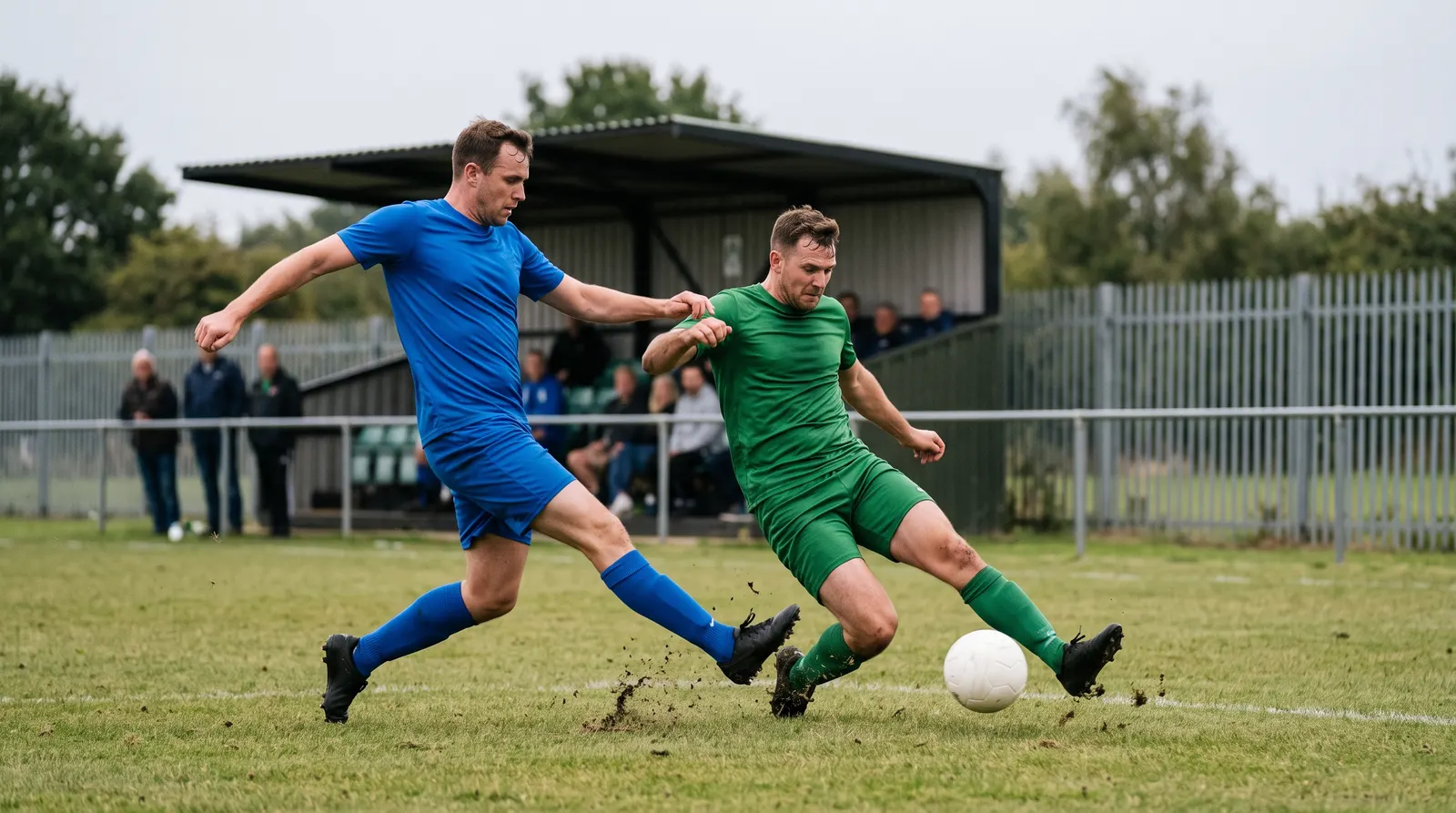
Most soccer players don't get hurt because they're unlucky. They get hurt because nobody prepared their body for what the game actually demands.
A 90-minute match involves 700-1,200 changes of direction depending on position, 150-250 high-intensity actions, and repeated eccentric loading on hamstrings and adductors at velocities the player may never reach in training. If your S&C program doesn't account for that, you're rolling dice every Saturday.
I've been programming for independent athletes and small squads for years. This is what I've learned about what actually works on the gym floor — not in a research abstract.
Why S&C Matters for Soccer (The Numbers)
The evidence is pretty clear at this point:
- Hamstring injuries drop 51% with structured eccentric training protocols (Nordic hamstring exercise being the most studied). That's from a meta-analysis across 8,400+ athletes.
- ACL injury rates reduce by 50-60% in female players following neuromuscular training programs. FIFA 11+ showed this repeatedly.
- Sprint speed improves 2-4% over an 8-week strength block. That doesn't sound like much until you realize it's the difference between getting to the ball first or not.
- Repeated sprint ability — the thing that separates fit players from tired ones in the 75th minute — improves significantly with concurrent strength and conditioning work.
S&C isn't about making soccer players look like bodybuilders. It's about building the physical qualities that let them do their job for 90 minutes without breaking down.
The Five Training Components
Every program I write touches these five areas. The ratios shift based on the phase, the player, and the position — but they're all present.
1. Maximal Strength
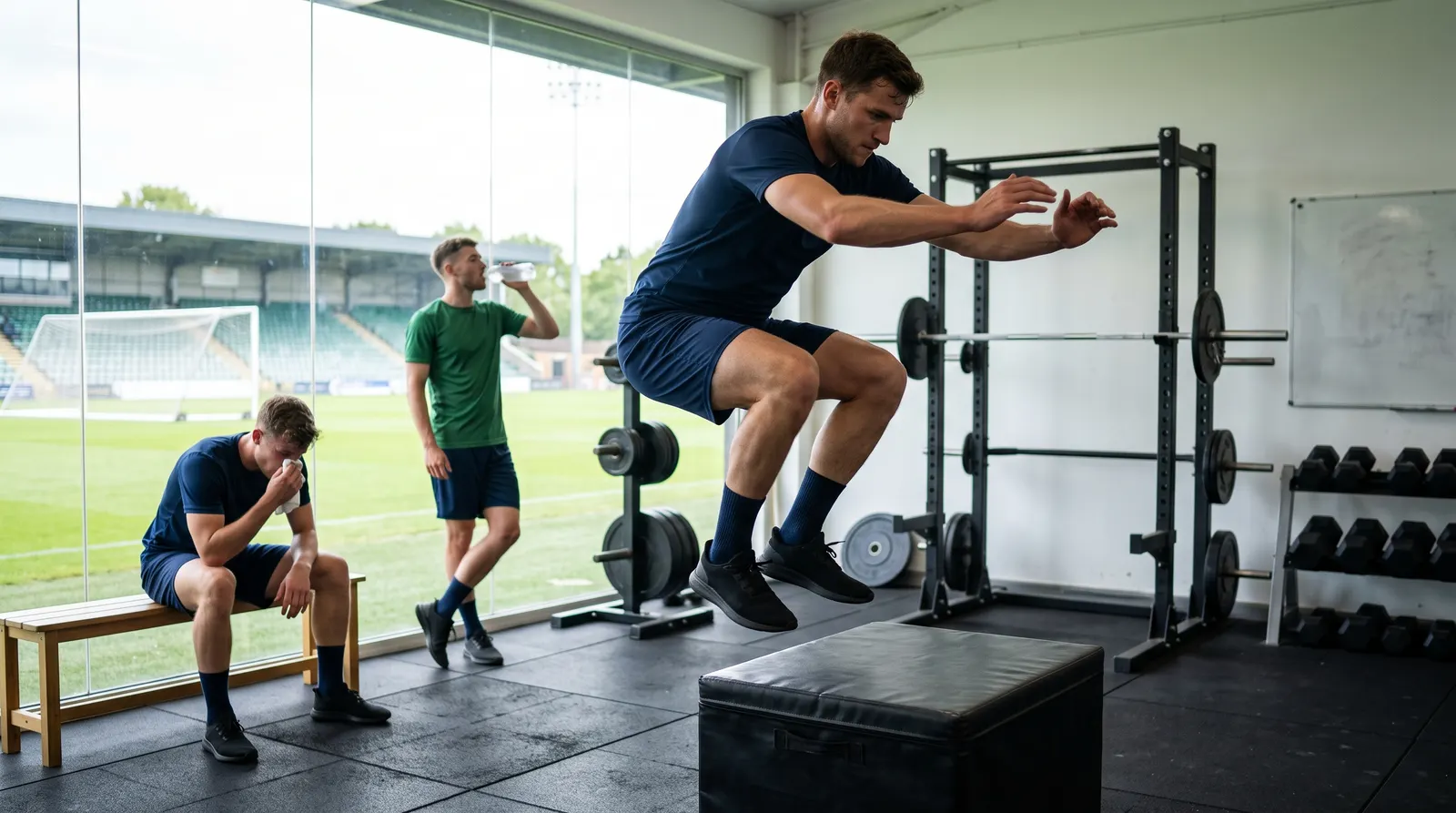
The foundation everything else is built on. A player who can't produce force can't produce force quickly (power), can't decelerate safely, and can't absorb repeated ground contacts.
Key exercises: Back squat, trap bar deadlift, split squat, Romanian deadlift, hip thrust.
Programming notes: 3-5 sets of 3-6 reps. Heavy relative to the player. In-season, I drop volume but keep intensity — 2-3 sets of 3-4 reps at 85%+ is enough to maintain strength without accumulating fatigue.
2. Power and Rate of Force Development
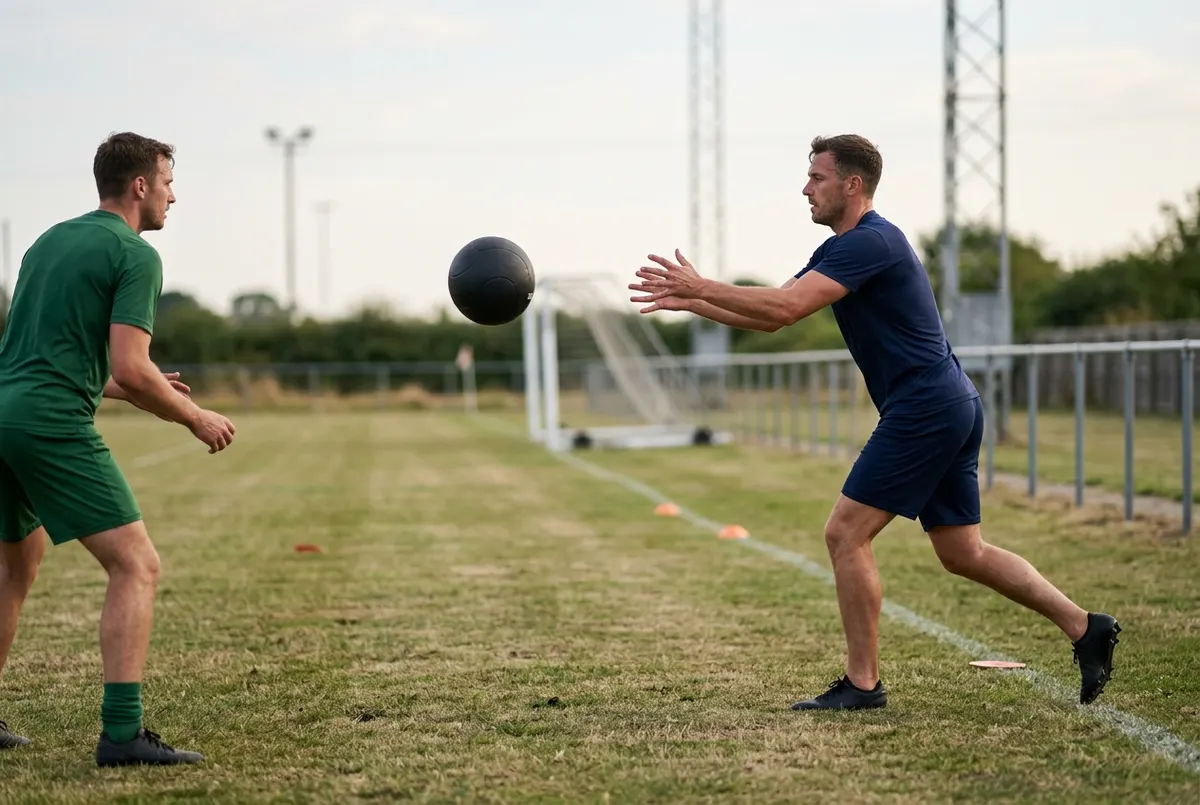
Strength is useless if you can't access it in 200 milliseconds. Soccer demands explosive actions — jumping, sprinting, changing direction — that happen faster than you can produce maximal force.
Key exercises: Trap bar jumps, hang cleans, depth jumps, medicine ball throws, kettlebell swings.
Programming notes: Low reps (2-5), full recovery between sets. Power work goes first in the session after the warm-up, when the nervous system is fresh. Never program power work on tired legs.
3. Speed and Acceleration
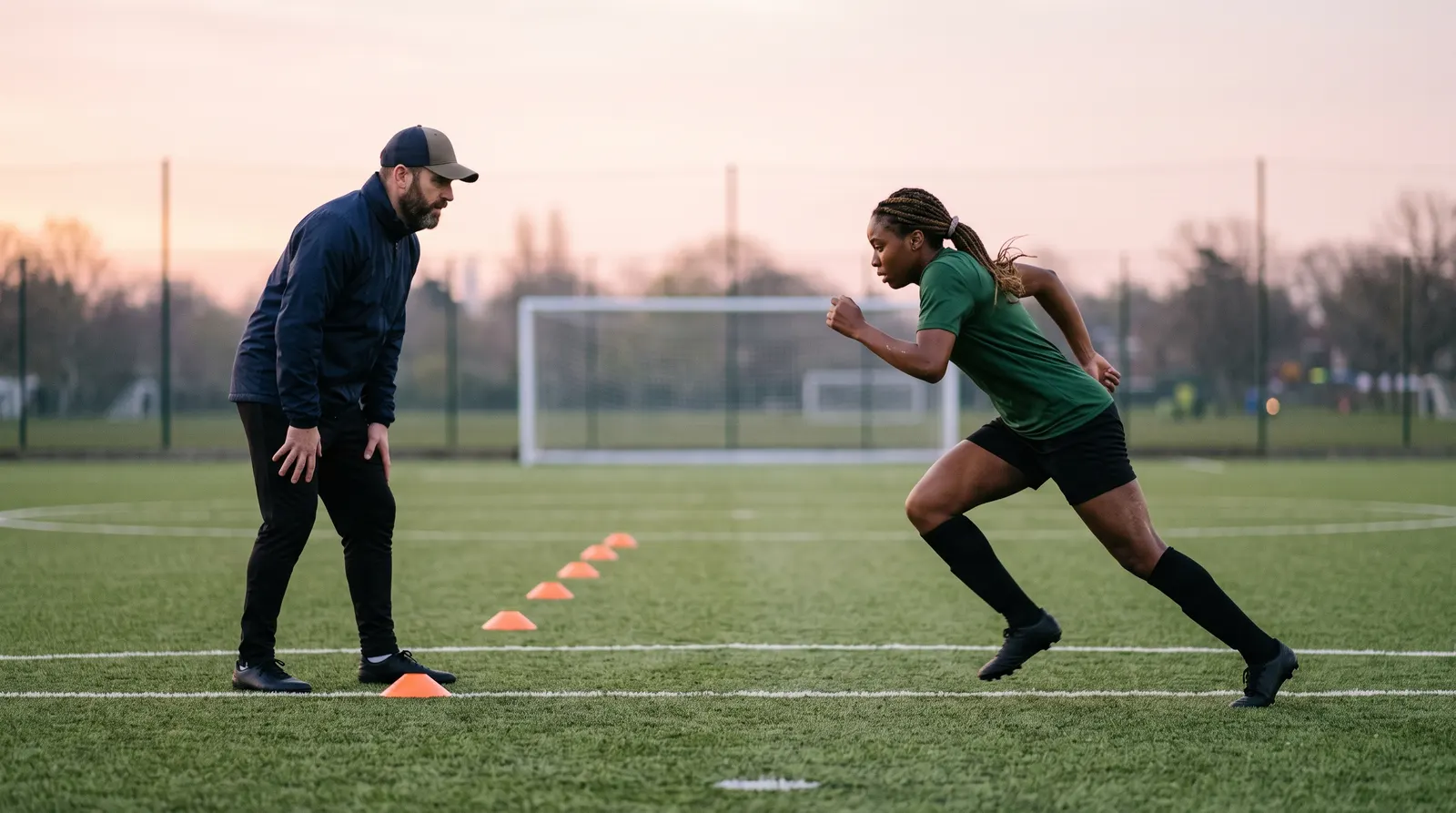
This is where the gym meets the pitch. Linear speed, curved sprinting, acceleration, and deceleration all need dedicated work — they don't just improve because a player gets stronger.
Key exercises: Sled sprints (10-20% body weight), short sprints (10-30m), flying sprints, acceleration drills from various starting positions.
Programming notes: True speed work requires full recovery — 1 minute per 10 meters sprinted is a decent rule of thumb. If your player is running 30m sprints on 45 seconds rest, that's conditioning, not speed work. Know the difference.
4. Conditioning and Energy System Development
Soccer is an intermittent sport. Players need a high aerobic base (to recover between sprints) and a well-developed anaerobic system (to perform the sprints themselves).
Key methods:
- Aerobic base: Long intervals (3-5 min) at 85-90% HRmax, tempo runs, small-sided games
- Anaerobic capacity: Short intervals (15-30s work, 15-30s rest), repeated sprint protocols
- Match-specific: Game-based conditioning that replicates the work:rest ratios seen in competition
Programming notes: The biggest mistake I see is conditioning work that's too hard to develop the aerobic system and too easy to develop the anaerobic system. Pick a target, train the target — our guide to energy system development for football covers how to structure these sessions properly. If you have access to GPS data, use velocity zones to prescribe and monitor intensity. Generic "fitness" sessions are a waste of time.
5. Mobility and Injury Prevention
This isn't 20 minutes of static stretching. It's targeted work on the areas that take the most abuse in soccer.
Priority areas:
- Hip flexors and adductors — groin injuries account for 10-18% of all soccer injuries
- Hamstrings — eccentric strength through full range, especially at longer muscle lengths
- Ankles — dorsiflexion range directly affects deceleration and change of direction mechanics
- Thoracic spine — rotation capacity matters for shooting, passing, and shielding
Key exercises: Nordic hamstring curls, Copenhagen adductor holds/raises, single-leg RDL variations, 90/90 hip switches, ankle dorsiflexion mobilizations.
Position-Specific Considerations
Not every player needs the same program. The physical demands vary significantly by position.
Goalkeepers
Emphasis on lateral power, reactive agility, and upper body strength. Goalkeepers need to produce force horizontally (diving) and vertically (high balls). More shoulder stability work, more unilateral power exercises (lateral bounds, single-leg box jumps). Less focus on repeated sprint conditioning since their match demands are fundamentally different.
Defenders (Centre-Backs)
Upper body strength matters more here than for other outfield positions. Heading duels, shielding, physical battles. Eccentric hamstring work is critical — centre-backs often sprint from a near-standing start to chase through balls, which is a high-risk pattern for hamstring injuries. Deceleration training is a priority.
Midfielders
Total distance covered is the highest for midfielders. Their conditioning needs are the greatest. Aerobic capacity is the foundation — they need to recover quickly between efforts across the full 90 minutes. Strength work can be slightly lower volume to manage overall load, but it can't be neglected. Strong midfielders win second balls.
Forwards
Acceleration and top-end speed are king. Forwards make fewer total sprints than midfielders but their sprints tend to be the highest intensity, often from poor starting positions. Power-to-weight ratio matters. Plyometric training has a bigger role here. Hamstring injury risk is highest in forwards — load the Nordics and RDLs accordingly.
Structuring a Training Week Around Match Day
This is where most S&C programs for soccer players fall apart. You can write the best exercises in the world, but if you put a heavy squat session the day before a match, you've done more harm than good.
The Match Day Minus (MD-) framework is the standard approach:
MD-4 (Tuesday if Saturday match)
Focus: Strength + Power This is your primary gym day. The player is recovered from the weekend match and has enough time before the next one. Heavy compound lifts, power exercises. Highest volume day of the week.
Example: Back squat 4x4, hang clean 3x3, split squat 3x6, Nordic curls 3x5
MD-3 (Wednesday)
Focus: Speed + High-Intensity Conditioning Pitch-based work dominates. Short sprints, change of direction, high-intensity small-sided games. If there's gym work, it's low volume — maybe 2-3 exercises focused on power.
MD-2 (Thursday)
Focus: Moderate session, tactical emphasis Lower physical load. If any gym work happens, it's accessory work only — mobility, prehab, light core work. The priority is tactical preparation on the pitch.
MD-1 (Friday)
Focus: Activation only No gym session. Maybe a short activation circuit (band walks, glute bridges, light plyos) before the team's walk-through. Keep everything under 15 minutes and low intensity.
MD+1 (Sunday after Saturday match)
Focus: Recovery Pool session, light bike, foam rolling. Nothing that adds training stress. Players who didn't feature may do a modified conditioning session to maintain load.
MD+2 (Monday)
Focus: Return to training Light to moderate session. Address any soreness or tightness. Some players may be ready for moderate strength work. Others need another easy day. This is where knowing your players individually matters.
Periodization: The 30-Second Version
Periodization for soccer isn't like periodization for powerlifting. You can't peak once and call it a season. You need to maintain physical qualities across 9-10 months of competition.
The basic structure:
- Pre-season (6-8 weeks): Build. Higher volumes, progressive overload, developing the physical base. This is where you can push hardest.
- In-season (36-40 weeks): Maintain and manage. Lower volume, maintain intensity. The match is the primary stimulus — your job is to keep the player robust and fill the gaps the game doesn't cover.
- Off-season (4-6 weeks): Recover, then rebuild. 1-2 weeks of complete recovery followed by a general preparation phase that addresses weaknesses.
The critical mistake is trying to build fitness in-season. You can't out-train a 46-game season. Maintain what you built in pre-season and manage fatigue. That's the job.
Common Mistakes I See
-
Programming like a bodybuilder. Chest/back/legs splits have no place in soccer S&C. Use movement patterns: squat, hinge, push, pull, carry, single-leg.
-
Ignoring the training load from pitch sessions. A player who just did 90 minutes of high-intensity practice doesn't need a brutal gym session on top. Track total load, not just gym load.
-
No eccentric work. Nordics, RDLs, Copenhagen raises — these aren't optional. They're the most evidence-supported injury prevention tools we have.
-
Every session is "hard." If every session is a 9/10 RPE, you're not training — you're just making players tired. Easy days need to be easy. Hard days need to be hard. The contrast is what drives adaptation.
-
Not tracking anything. If you can't see the training load trend over 4 weeks, you're guessing. Guessing gets players hurt.
Putting It All Together
The best S&C program for soccer players is the one that's actually planned, tracked, and adjusted based on how the player is responding. Not a PDF template downloaded from the internet. Not a program designed for a generic "athlete."
Your players have specific positions, specific injury histories, specific match schedules, and specific physical profiles. The program should reflect that.
This is exactly why I built PlayerPlan — to give independent S&C coaches a proper tool for programming around match days, tracking load across the week (including what players do at their clubs), and sharing sessions with players without needing them to download an app. If you're still managing this in spreadsheets, try it free for 30 days at player-plan.com.
Ready to ditch the spreadsheets?
Session building, periodization, load monitoring and no-login player sharing — built for football S&C coaches.
Start your free 30-day trialPro features, AI included. No credit card.