Programming
How to Program for Soccer Players: A Step-by-Step Guide for S&C Coaches
Step-by-step guide to programming for soccer players. Exercise selection, periodization, sets and reps by phase, and weekly structure.

Mario Jovanovic
S&C coach · 8 min read

How to Program for Soccer Players: A Practical Step-by-Step Guide
Programming for soccer players is not the same as programming for general population clients or even other athletes. The sport has specific physical demands, a long competitive calendar, and the added complication that you usually do not control the player's full training week.
I have been writing programs for soccer players for years, and the biggest lesson I have learned is this: the best program is not the most sophisticated one. It is the one that accounts for what the player actually does outside your sessions, targets their specific needs, and is simple enough to execute consistently.
This guide walks through the process from needs analysis to finished program. Whether you are writing your first soccer S&C program or looking to sharpen your approach, this is the framework that works in practice.
Step 1: Needs Analysis -- What Does Soccer Actually Demand?
For a comprehensive overview of S&C fundamentals for soccer, see our guide to Strength and Conditioning for Soccer Players.
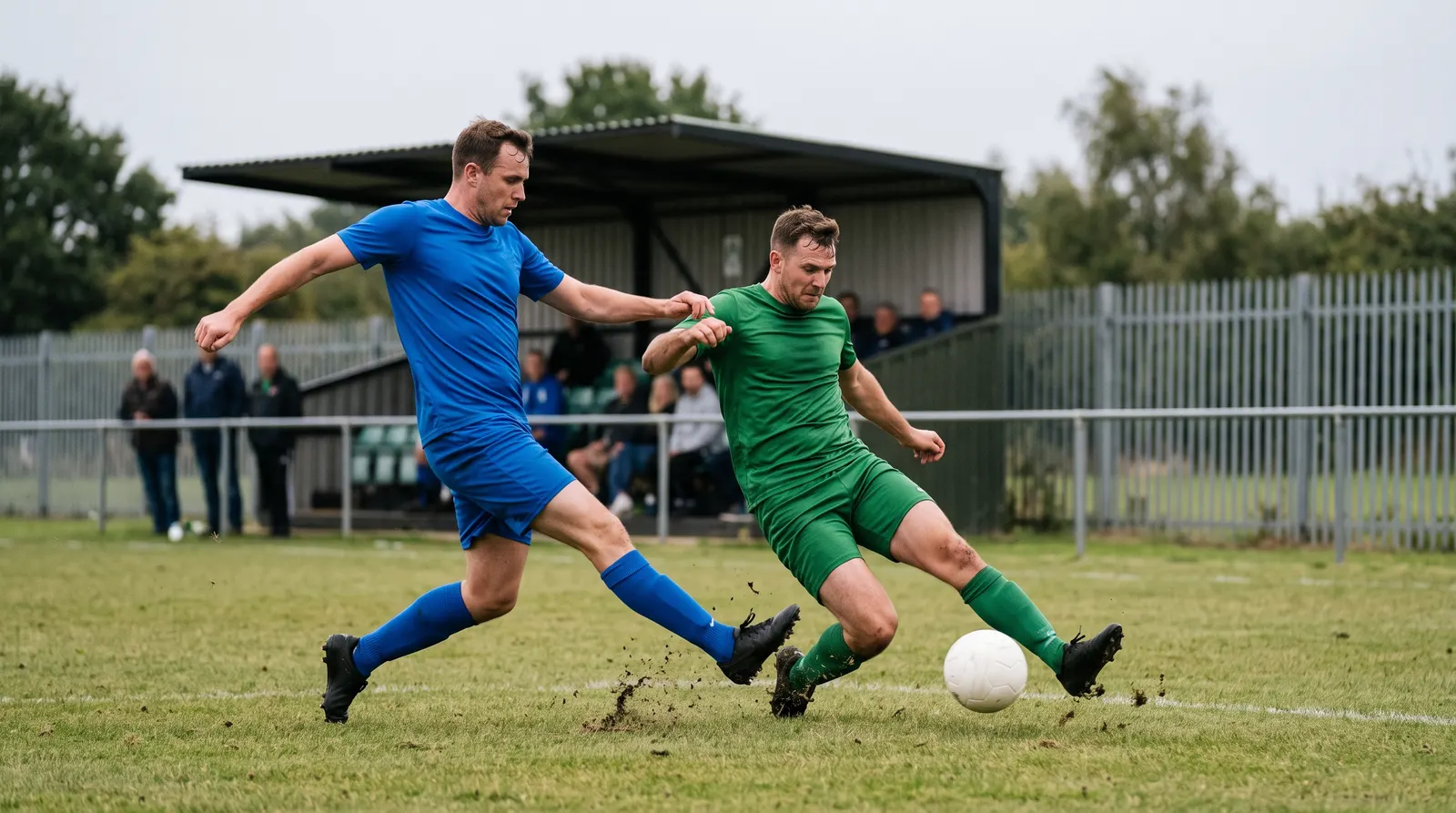
Before writing a single set and rep, you need to understand what the sport requires. Soccer is an intermittent sport involving 9-13km per match, 150-250 high-intensity actions, and repeated sprints with incomplete recovery. The movement profile is dominated by single-leg actions, hip-extension patterns, and multidirectional change of direction -- with deceleration being the most injurious action.
The most common injuries -- hamstrings, groin/adductors, ACL, and ankle sprains -- should directly shape your exercise selection. Prevention is not a separate "prehab" block; it is woven into the training itself.
Step 2: Building the Training Week
The weekly structure depends on the training phase and how many sessions you have with the player.
In-Season (1-2 sessions per week)
Use the match-day minus framework:
- MD-4: Strength-focused (heaviest session of the week)
- MD-3: Power/speed-focused (neural priming, low volume)
- If only one session available, make it MD-4 content
Off-Season (3-4 sessions per week)
More flexibility. A common structure:
| Day | Focus |
|---|---|
| Monday | Lower body strength |
| Tuesday | Upper body + conditioning |
| Wednesday | Active recovery or off |
| Thursday | Lower body power + posterior chain |
| Friday | Full body or weak-point focus |
| Weekend | Sport-specific work, pickup games, rest |
Pre-Season (2-3 sessions per week)
Transition from off-season volume to in-season intensity. Training volume decreases, specificity increases, and conditioning intensity ramps up.
Step 3: Exercise Selection Principles
These five principles guide every exercise choice.
1. Compound Over Isolation
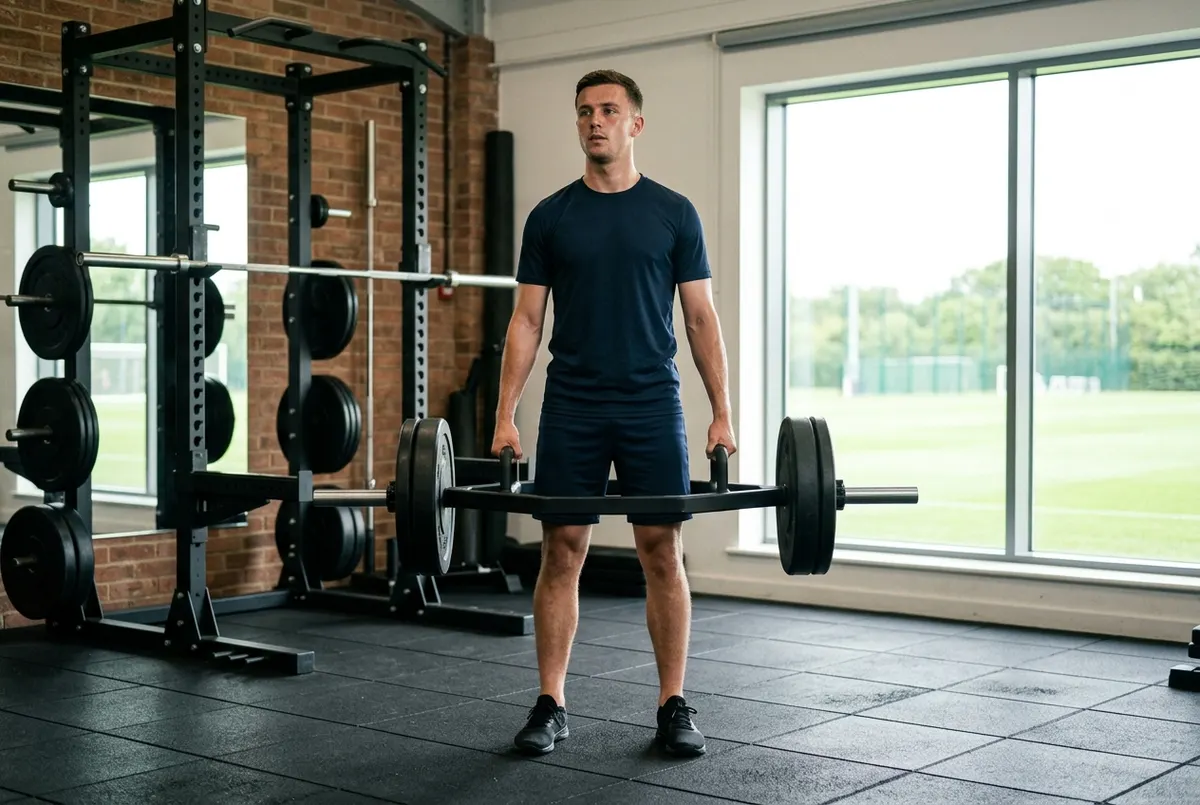
Squats, deadlifts, presses, rows, and lunges form the backbone. A soccer player does not need leg extensions. They need movements that develop force through multiple joints simultaneously, mimicking how they actually produce force on the pitch.
Primary movements to include:
- Hip hinge: trap bar deadlift, Romanian deadlift, hip thrust
- Squat pattern: back squat, front squat, goblet squat
- Lunge pattern: Bulgarian split squat, walking lunge, lateral lunge
- Push: bench press, overhead press, push-up variations
- Pull: chin-up, row variations, face pull
2. Unilateral Emphasis
Soccer is a single-leg sport. At least 40-50% of your lower body work should be unilateral. Bulgarian split squats, single-leg RDLs, step-ups, and single-leg hip thrusts.
This is not just about sport specificity. Unilateral work exposes and corrects asymmetries, which are a known injury risk factor. If a player's left leg is 15% weaker than their right, bilateral squats will mask that. Single-leg work reveals it.
3. Posterior Chain Focus
The hamstrings, glutes, and calves are the engine of sprinting and the most commonly injured muscle group in soccer. Your program should be slightly posterior-chain dominant -- roughly 60/40 posterior to anterior in lower body volume.
Non-negotiable exercises:
- Nordic hamstring curls (51% hamstring injury reduction when programmed consistently)
- Romanian deadlifts (hip-dominant hamstring loading)
- Hip thrusts or glute bridges (horizontal force production)
- Copenhagen adductor holds/lifts (groin injury prevention)
4. Train Deceleration
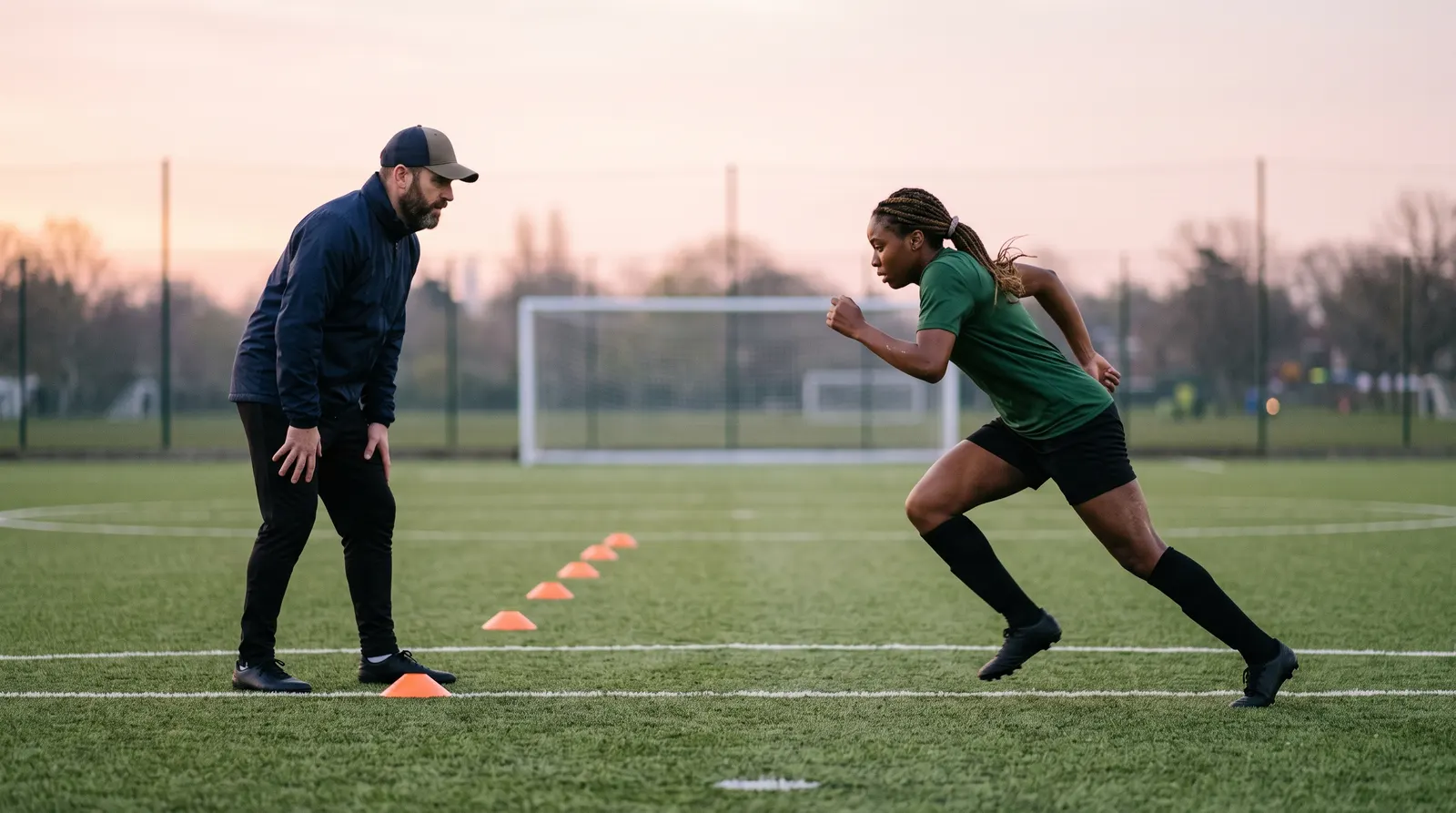
Most coaches programme acceleration work (sprints, jumps, cleans). Few deliberately train deceleration. Yet deceleration is where most non-contact injuries occur.
Include:
- Eccentric-focused tempos on squats and lunges (3-4 second lowering)
- Drop landings and stick landings from various heights
- Lateral deceleration drills (shuffle-stop, cut-and-freeze)
- Trap bar deadlift with controlled eccentric
5. Include What Prevents Injuries (Inside the Program, Not Alongside It)
Do not create a separate "prehab" routine and hope the player does it. Build injury prevention into the program itself:
- Nordics are a hamstring exercise, not a "prehab" exercise. Program them like you would any strength movement.
- Copenhagen adductors go into the superset with your split squats.
- Calf raises are part of the session, not an afterthought.
Step 4: Sets, Reps, and Load by Phase
Programming variables shift across the training year. Here is a practical guide.
Off-Season: Hypertrophy / General Strength (Weeks 1-6)
| Variable | Guideline |
|---|---|
| Sets | 3-4 per exercise |
| Reps | 8-12 |
| Load | 65-75% 1RM |
| Rest | 60-90 seconds |
| Tempo | Controlled (3010 or 2010) |
| Focus | Build muscle, correct imbalances, increase work capacity |
Off-Season: Max Strength (Weeks 7-12)
| Variable | Guideline |
|---|---|
| Sets | 3-5 per exercise |
| Reps | 3-6 |
| Load | 80-90% 1RM |
| Rest | 2-3 minutes (main lifts) |
| Tempo | Controlled eccentric, explosive concentric |
| Focus | Peak force production, neural adaptations |
Pre-Season: Strength-Power (Weeks 1-4)
| Variable | Guideline |
|---|---|
| Sets | 3-4 per exercise |
| Reps | 3-5 (strength), 3-5 (power) |
| Load | 75-85% (strength), 30-60% or bodyweight (power) |
| Rest | 2-3 minutes |
| Method | Contrast/complex training (heavy lift followed by explosive movement) |
| Focus | Convert strength to power, sport-specific transfer |
In-Season: Maintenance
| Variable | Guideline |
|---|---|
| Sets | 2-3 per exercise |
| Reps | 3-6 |
| Load | 75-85% 1RM |
| Rest | 2-3 minutes |
| Volume | Reduced (fewer exercises, fewer total sets) |
| Focus | Maintain strength qualities, prevent detraining |
The key shift from off-season to in-season: intensity stays high, volume drops. A player maintaining their squat at 3x4 @ 80% is doing meaningful work. A player doing 3x12 @ 60% is accumulating fatigue without sufficient stimulus to maintain strength.
Step 5: Integrating Conditioning With Strength
Soccer players do not need a separate "cardio" program. They are already running 30-50km per week through training and matches during the season.
When to Add Conditioning
- Off-season: Yes. Build aerobic capacity (longer intervals, tempo runs) and develop repeated sprint ability (short intervals, SSG-style work). This is also where energy system development sessions with structured work:rest ratios add the most value, and you have the freedom to run a proper off-season training block with dedicated conditioning days.
- Pre-season: Shift to high-intensity, soccer-specific conditioning. Small-sided games, repeated sprints with direction changes, sport-specific intervals.
- In-season: Almost never. The match and club training provide the conditioning stimulus. Adding more is usually counterproductive. If a player is not match-fit during the season, they have a playing-time problem, not a conditioning problem.
Conditioning Session Placement
Never programme conditioning before strength work on the same day (concurrent training interference). If both must happen on the same day, lift first. Ideally, separate them by 6+ hours or put them on different days.
Step 6: Communication With the Club Coach
This is the part that does not show up in textbooks but determines whether your program actually works.
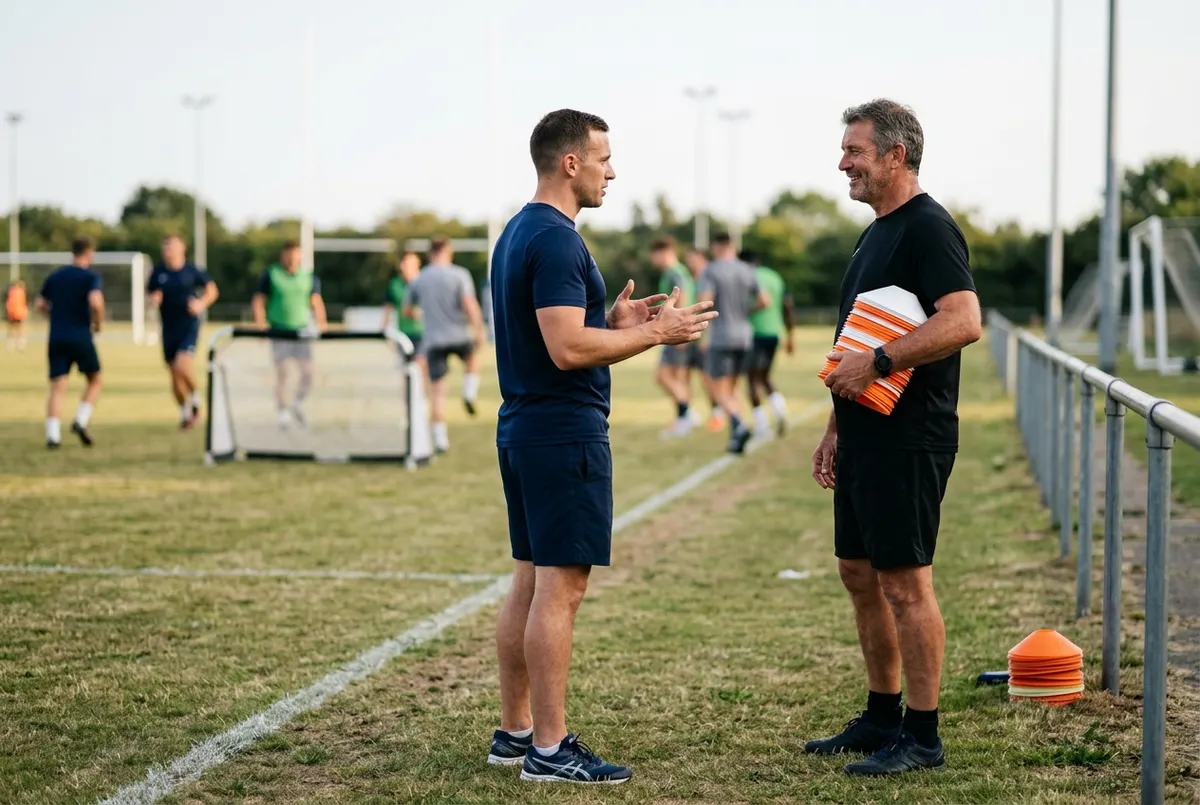
If you are an independent S&C coach working with a player who also trains with a club, you need a relationship with their manager or coaching staff. Not a formal partnership -- just enough communication to know:
- What days are hard training days
- When matches are scheduled (including rescheduled fixtures)
- If the player picked up any knocks in training
- What the club's physical preparation approach looks like (so you complement rather than duplicate)
How to approach it: Frame yourself as supportive, not competing. "I want to make sure what I am doing complements your work, not adds to their load. Can I get their weekly schedule?" Most club coaches appreciate this.
If communication is not possible (and sometimes it is not), rely on the player to report what they did. Have them log club sessions -- even just duration, RPE, and a brief description. That data lets you adjust your programming week to week instead of guessing.
Putting It All Together
A good soccer S&C program is not complicated. It is:
- Based on the sport's demands -- not borrowed from bodybuilding or powerlifting
- Built around the match schedule -- not imposed on top of it
- Posterior-chain and unilateral dominant -- because that is what soccer demands and what prevents injuries
- Adjusted weekly -- based on external load data, wellness, and the reality of what the player actually did
- Simple enough to execute consistently -- the program the player follows beats the perfect program they skip
The best programs I have written are not the ones with the cleverest periodization or the most exercises. They are the ones where I knew what the player was doing outside my sessions, adjusted accordingly, and kept the work focused on what actually matters.
Building and managing programs across multiple players, phases, and training weeks is what PlayerPlan was designed for. The program designer handles multi-week periodization with drag-and-drop scheduling, and players access their sessions through a simple shared link. If you are spending more time in spreadsheets than coaching, it might be worth a look. Try it free for 30 days at player-plan.com.
Ready to ditch the spreadsheets?
Session building, periodization, load monitoring and no-login player sharing — built for football S&C coaches.
Start your free 30-day trialPro features, AI included. No credit card.