Load & monitoring
Individual Training for Congested Fixtures in Football
Individual training for congested fixtures in football: how two matches in a week change recovery, and how to split the squad by minutes and track load.

Mario Jovanovic
S&C coach · 8 min read
Individual Training for Congested Fixtures in Football
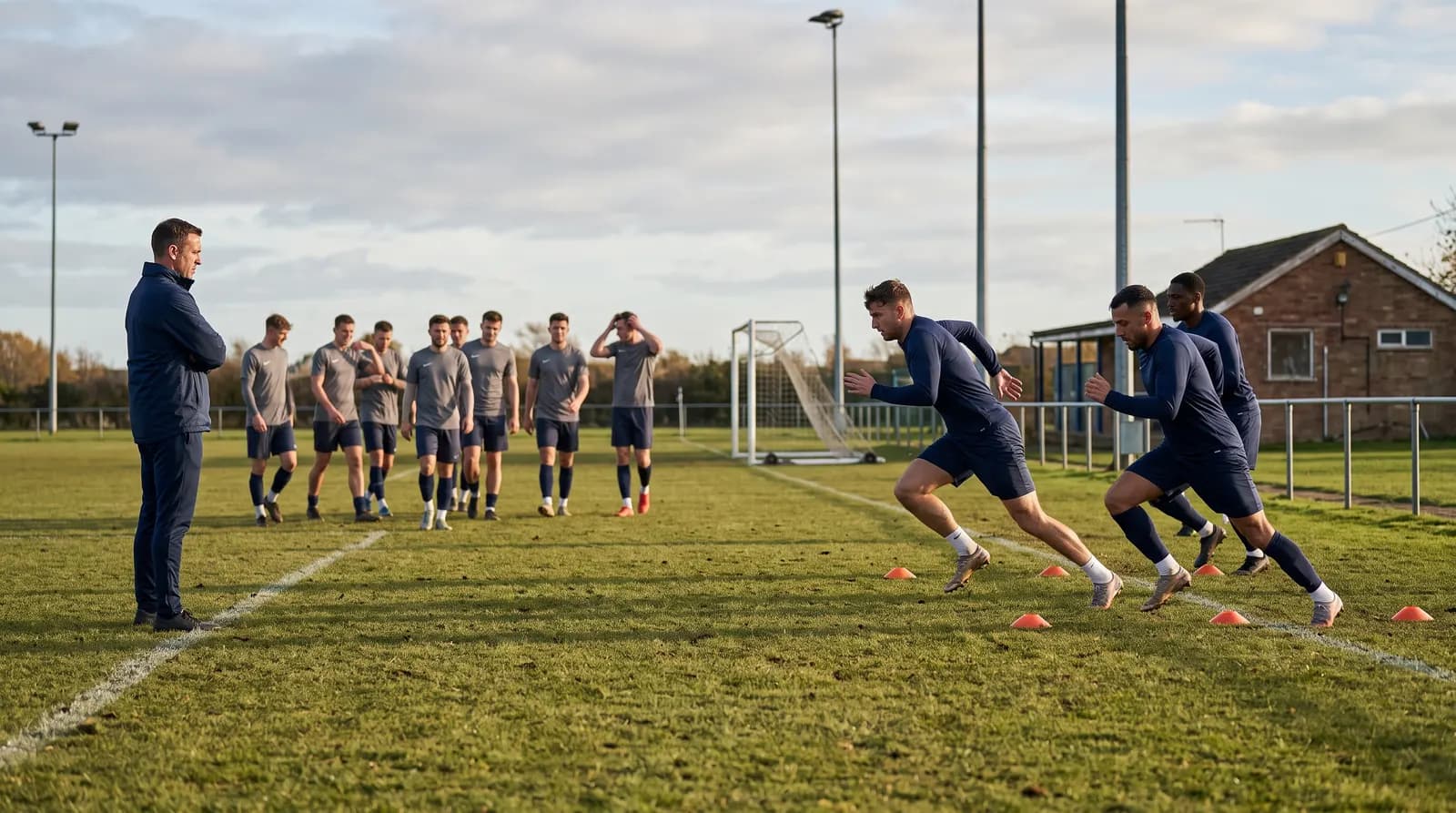
Individual training for congested fixtures in football means one thing: when a squad plays twice in a week, you stop prescribing by squad and start prescribing by minutes played. The player who went 90 minutes on Wednesday and the player who sat on the bench are on the same roster, in the same group chat, and in completely different recovery windows by Thursday morning. A group circuit treats them as one athlete.
This post covers what the recent research says about those windows, how to split a squad into load groups in a congested week, and how to track it without drowning in spreadsheets. It builds on the match-day minus framework and ACWR monitoring; read those first if MD-1 and sRPE are new to you. The match-day minus post covers the calendar; this one covers who gets what inside it.
Two Matches in a Week Change the Recovery Window
A normal week gives you a clean cycle: recover, load, taper, play. A congested week, commonly defined as fewer than 96 hours between matches (Julian et al., 2021), removes the middle of that cycle. There is no load phase. You have a recovery phase and a taper phase, and they overlap.
At the top of the game this is routine: FIFPRO's 2023/24 workload report found 54% of about 1,500 monitored players faced excessive or high workload (FIFPRO, 2024). Your squad does not play 55 matches, but a Tuesday–Saturday pair, a cup replay or a midweek league game compresses recovery in the same way.
What the Research Says About Congested Weeks
Three recent papers matter most for programming. None of them is a congestion trial; together they describe the problem you are actually solving. Know the limits first: the evidence is mostly professional men, and I have not seen congestion data for women. Be more conservative with under-18s.
1. Recovery is incomplete at 72 hours, and not evenly. A 2025 systematic review of 13 studies in professional players found significant physical impairments persisted 72 hours after a match. Sprint ability, change of direction and technical skill had recovered by then. Vertical jump and hamstring strength had not. The authors also noted large variation between studies and between players, and recommended accounting for individual recovery profiles (Drayton, Hamad & Spyrou, JSCR 2025).
For a Wednesday–Saturday pair, that means by Saturday kickoff (72 hours) sprint and change of direction have recovered, but jump output and hamstring strength may not have. The review says nothing about how sprint recovery looks at 48 hours, so do not assume Friday readiness from how a player feels; check the jump.
2. Non-starters and starters accumulate different loads, and top-ups do not close the gap. A 2025 systematic review of 22 studies (484 adult men, 79 adult women, 95 youth males) found players with more playing time accumulated more total volume and high-intensity running. Similar training loads between starters and non-starters suggested top-up running for unused players, which was insufficient to compensate for the match load (Rago et al., 2025).
3. The detail of the top-up matters. A 2024 narrative review of compensatory training reported compensatory sessions averaging about 17 minutes. A session done straight after a match delivered only about 0.03 km of sprinting, against up to 0.3 km in a full match. It also named MD+1 as the best slot, in a standard week (Clemente et al., Biology of Sport 2024).
Put together: starters carry residual neuromuscular fatigue into the next match, non-starters carry a deficit of match intensity into it, and the standard group session fixes neither.
Individual Training in Congested Fixtures: Three Load Groups
This is the practical answer to how to program for multiple athletes without writing 15 separate plans. Assign each player to one of three groups after every match, based on minutes played and the sRPE they report.
| Group | Minutes played | What they carry into the next match | Priority |
|---|---|---|---|
| A: Heavy | 60+ | Residual jump and hamstring fatigue | Protect. Low-volume, no new stress |
| B: Partial | 15–60 | Moderate fatigue, partial high-speed exposure | Maintain. Light top-up scaled to minutes |
| C: Unused | 0–15 | A high-speed and intensity deficit | Top up. Add real sprint exposure |
Injured or rehabbing players are not Group C; they stay on their return-to-play plan.
The cut-offs are my working rules, not trial-derived thresholds. Adjust them for your level and for age, and let the player's reported RPE overrule the minutes when they disagree. Tell the head coach which group each player is in; it takes one message and stops a full-squad session undoing the plan.
Programming Two Matches in One Week
Take a Wednesday and Saturday pair, 72 hours apart. Here is how the same two days look for each group.
| Day | Group A (heavy) | Group B (partial) | Group C (unused) |
|---|---|---|---|
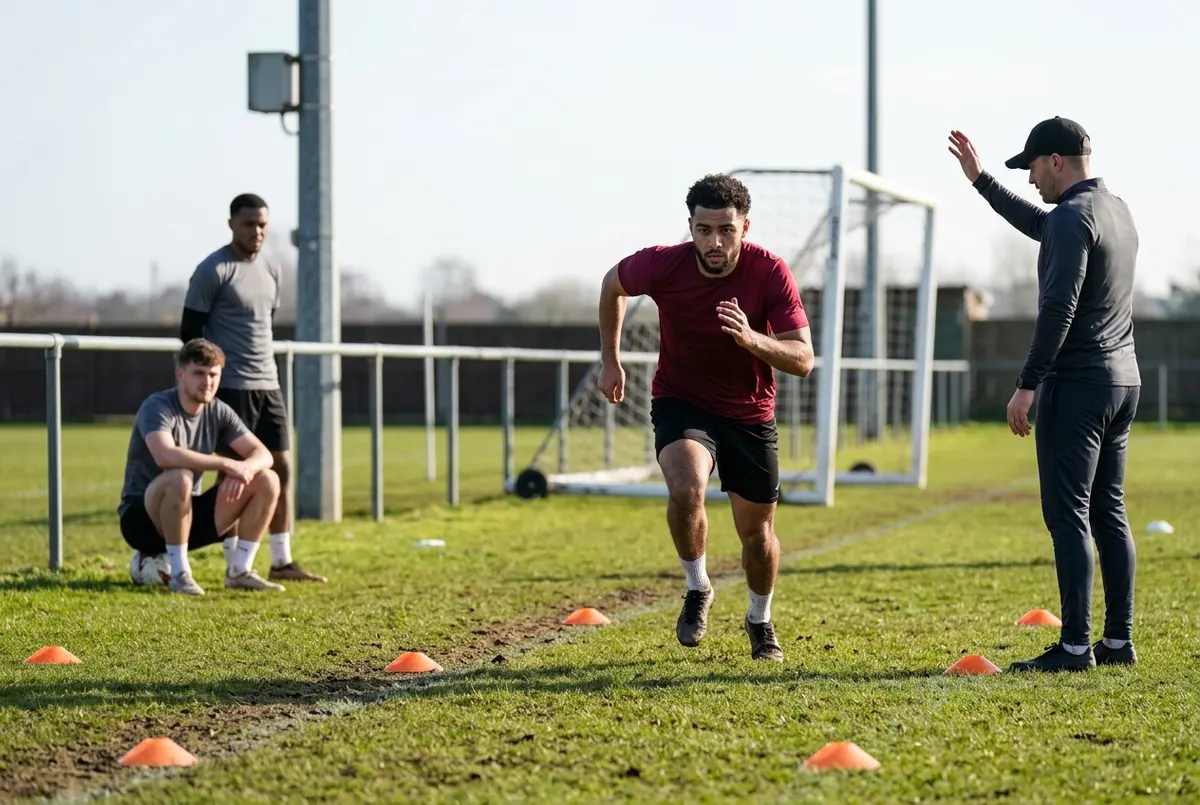
| Thu (MD+1) | Recovery: easy bike or pool, mobility. No lower-body loading | Recovery plus 10–15 min easy aerobic top-up | Sprint top-up: 2–3 flying sprints at 90–95%, plus 8–10 min of high-speed running; one low-volume heavy lift if healthy (see below) |
| Fri (MD-1) | Primer only: 2×3 jumps or sprints at low volume, check jump output | Standard MD-1 primer | Standard MD-1 primer |
The sets, reps and minutes here are my working numbers, not trial-derived doses.
Three principles sit behind that table:
- Don't add strength for Group A. The Drayton review found hamstring strength still impaired at 72 hours. A new eccentric or heavy lower-body stimulus on Thursday or Friday is stress on a system that has not recovered. This is a coaching judgment, not a trial result.
- Make the top-up specific. Clemente's numbers show 17 easy minutes delivers a fraction of match sprinting. If the goal is to cover the high-speed deficit, programme the sprint exposure directly, short and fast with full rest, rather than extra conditioning laps.
- Keep Group C's strength, carefully. The match-day minus and in-season posts say no lifting around a two-match week; that assumes the player played. A healthy player who genuinely did not play has spare capacity, so one low-volume session (e.g. 3×3 trap bar deadlift at RPE 7) can keep strength qualities that in-season minutes won't. Skip it for anyone returning from injury, and for young players unless they already lift.
Writing three versions of every session for a 15-player squad? PlayerPlan's session builder lets you duplicate a session and adjust it per player, then each player sees their own sessions through their own share link, no login needed. Try it free for 30 days →
How to Monitor Training Load in Football During a Congested Week
A single 7-day ratio hides which player took the match, so read ACWR per player alongside minutes and sRPE. Three signals do most of the work:
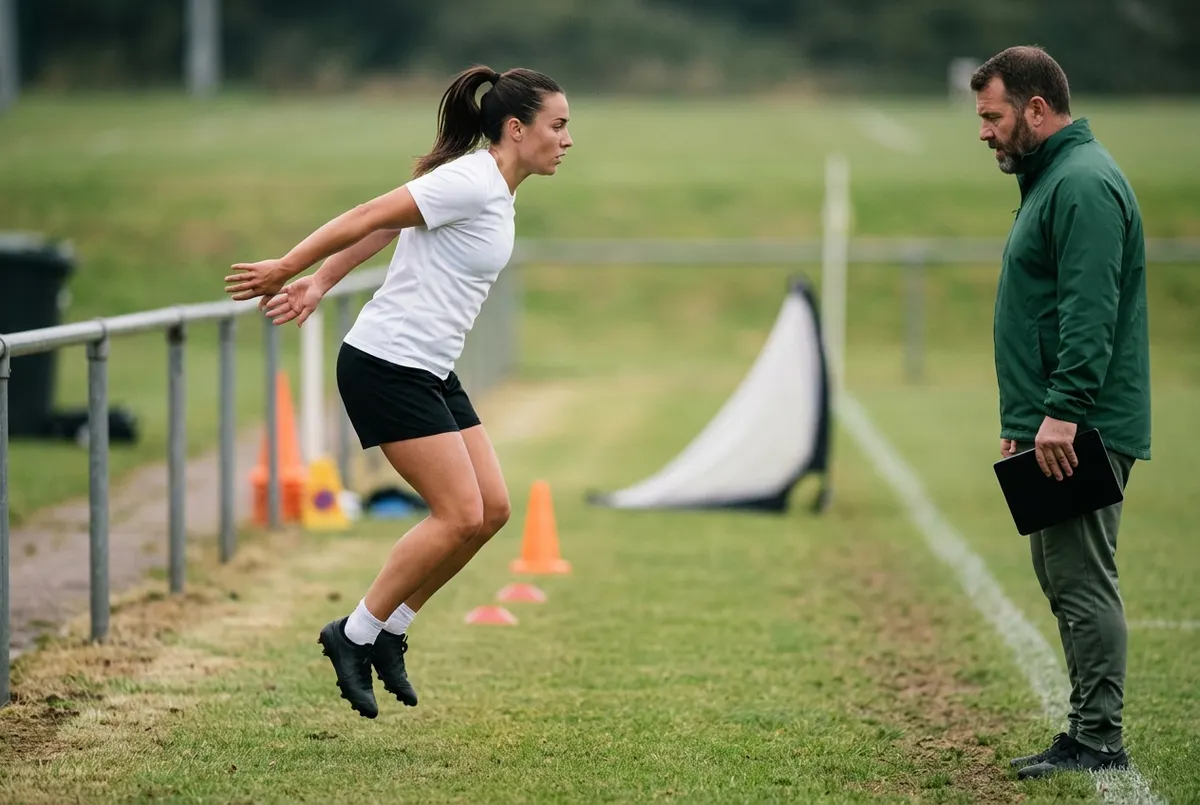
- Session RPE × minutes after every match and session. Collect it within 30 minutes. It captures internal load, which is where starters and non-starters differ most (Clemente et al., 2024 found match RPE consistently higher in starters).
- A 30-second readiness check before MD-1. A countermovement jump and a one-line wellness score (soreness and sleep). If you can only add one test, make it the jump, since that is the measure Drayton found still depressed at 72 hours.
- Running totals by player, not by squad. Track minutes and sRPE over a rolling 7 days for each athlete, and compare each player to their own usual week. Short recovery between matches goes with higher muscle-injury rates in the older UEFA data; see why individual training matters for that evidence.
Common Mistakes in a Congested Week
- Running one squad session at the same intensity. It over-doses Group A and under-doses Group C in the same hour.
- Treating unused players as "rested." Rago's review found top-ups insufficient to offset match load, and Clemente's found compensatory sessions deliver far less sprinting than a match.
- Assuming Friday readiness from how a player feels. Sprint and COD recover first; jump and hamstring strength lag. Check the jump.
- Copying a pro-club plan. Scale volumes down and lean on RPE, not GPS you may not have.
- Letting congestion run for weeks without a reset. When the schedule eases, rebuild the strength you skipped. See programming around club training and in-season strength.
Key Takeaways
- Congested weeks remove the load phase of the cycle; you are managing recovery and taper only.
- By 72 hours, sprint and COD have recovered, but jump and hamstring strength can still be impaired. Check the jump before MD-1.
- Starters and non-starters carry different problems: fatigue vs a high-speed deficit.
- Split the squad by minutes played into three groups and prescribe by group, then adjust by RPE.
- Make non-starter top-ups sprint-specific and place them on MD+1.
- Monitor per player with sRPE, a jump check and rolling 7-day totals.
FAQ
What counts as a congested fixture period in football?
It is commonly defined as at least two matches with less than 96 hours between them. For a grassroots or semi-pro squad, treat any week with two matches, including cups and tournaments, as congested.
Should I still do strength training in a two-match week?
For players with heavy minutes, usually not, beyond primer work. For players with few or no minutes, a single low-volume heavy session is reasonable. Keep volume low and stop short of failure.
How do I handle training for a squad of different minutes?
Group players after each match by minutes played (heavy, partial, unused) and prescribe one session variant per group. Three versions are manageable; fifteen are not.
How long does it take to recover from a football match?
A 2025 systematic review found sprint, change of direction and technical performance recovered by 72 hours, but vertical jump and hamstring strength were still significantly impaired. Recovery varies between players.
Does compensatory training work for substitutes?
It helps, but current evidence says it does not replicate match demands, particularly sprinting. Programme sprint exposure directly on MD+1.
Congested weeks are where one-size sessions fall apart. PlayerPlan lets you build a session once, tailor it per player, track sRPE and external loads logged through each player's share link, and see every athlete's load trend at a glance. Start your free 30-day trial at player-plan.com.
References
- Drayton AM, Hamad MJ, Spyrou K. The Time Course of Postmatch Physical Impairments in Professional Soccer: A Systematic Review. J Strength Cond Res. 2025. doi:10.1519/jsc.0000000000005252
- Clemente FM, Pillitteri G, Palucci Vieira LH, Rabbani A, Zmijewski P, Beato M. Balancing the load: a narrative review with methodological implications of compensatory training strategies for non-starting soccer players. Biol Sport. 2024. doi:10.5114/biolsport.2024.139071
- Rago V, Figueiredo P, Miranda-Gonzalez CE, et al. Accumulated training load between football players exposed to different playing times: a systematic review. Int J Sports Sci Coach. 2025. doi:10.1177/17479541251315667
- FIFPRO. Excessive Workload Demands: Player Performance, Recovery and Health (2024 Annual Workload Report, 2023/24 season). September 2024. fifpro.org/articles/2024/09/seven-key-findings-from-fifpro-s-latest-workload-report
- Julian R, Page RM, Harper LD. The Effect of Fixture Congestion on Performance During Professional Male Soccer Match-Play: A Systematic Critical Review with Meta-Analysis. Sports Med. 2021 (cited only for the congestion definition).
Ready to ditch the spreadsheets?
Session building, periodization, load monitoring and no-login player sharing — built for football S&C coaches.
Start your free 30-day trialPro features, AI included. No credit card.