Programming
International Window in Football: Who Coaches the Player?
The international window in football changes every player's load differently. What to do if you're called up, and why everyone else needs remote coaching.

Mario Jovanovic
S&C coach · 5 min read
International Window in Football: Who Coaches the Player?
International window football planning has a new problem in 2026: a 16-day block (21 September to 6 October), up to four national team matches, merged into one by FIFA's new calendar. The calendar is a fact. What it does to each player is not, because no two players live through it the same way.
STATSports published a sharp piece on this by Tom King, a former Liverpool first-team fitness coach. His line stuck with us: there is no such thing as one international-break programme. This post takes that idea one step further, to the players who have no staff at all, and to the coaches who can reach them from anywhere. If you are a player, read it as your window. If you coach players, read it as the case for coaching them remotely.
Three players, three different windows
The player called up from the other side of the world. He flies 18 hours, plays 90 minutes on an unfamiliar surface, sleeps badly. In a study of national team footballers on a long-haul trip, sleep dropped during travel and on match nights. Research on international travel suggests eastward flights and bigger time-zone shifts cost more: poorer sleep and fatigue for around two days after arrival. His problem is load and recovery, and nobody at his club can see either of them.
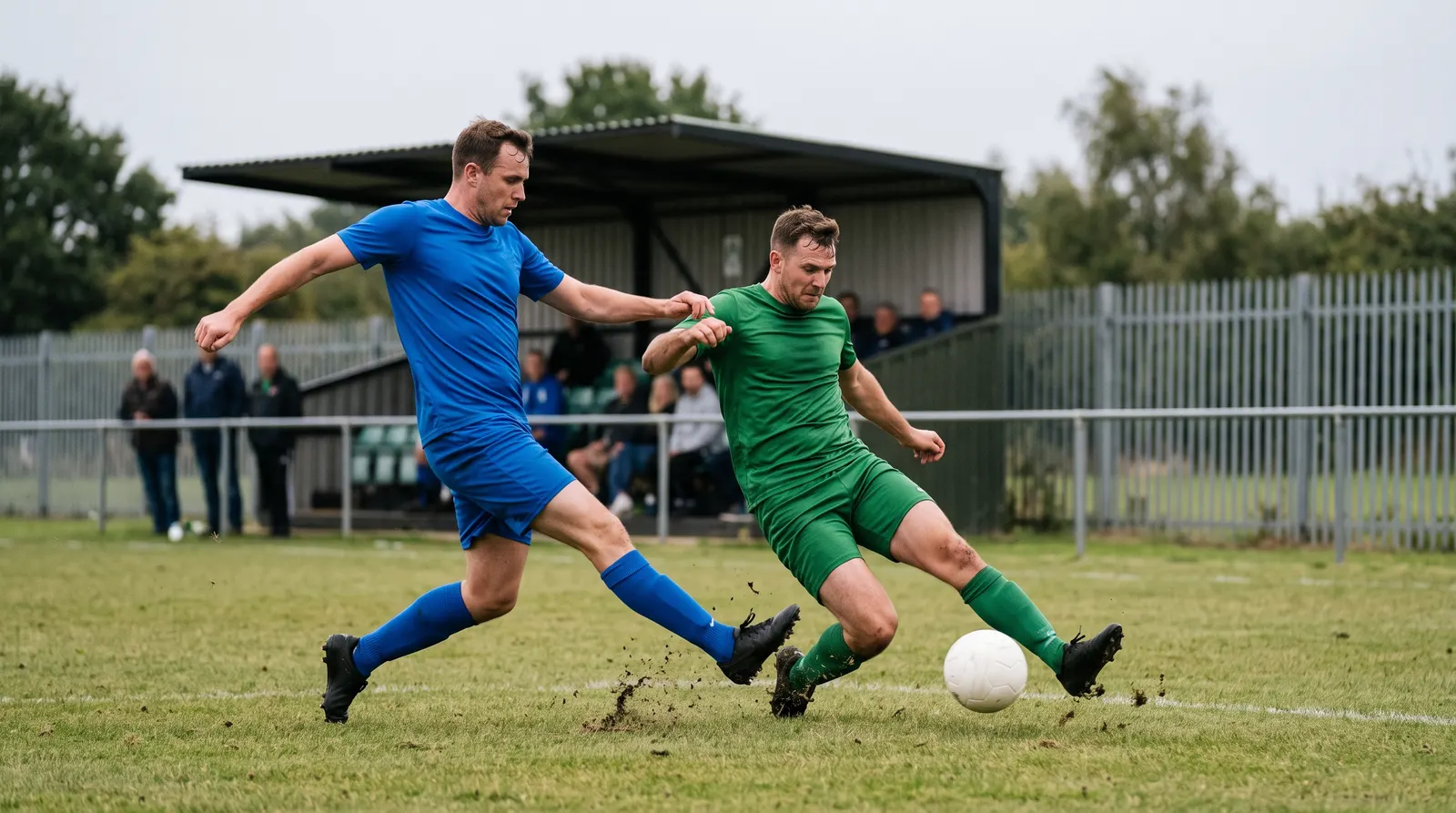
The player called up nearby. Short travel, but he still plays up to four matches in 16 days. FIFPRO's workload report found that for players at national team level, 67% of minutes were played in the "critical zone" (45 minutes or more, less than five days apart), up from 61% the season before. Match demand is where football injuries concentrate: the UEFA Elite Club Injury Study (Ekstrand and colleagues) reports roughly 30 injuries per 1,000 match hours against about 6 per 1,000 training hours. More matches means more match hours.

The player who stays home. This is the one most people forget, and the window is the biggest chance of the season for him. Joo (2018) followed semi-professional soccer players: two weeks of doing nothing lowered Yo-Yo IR2 and repeated-sprint performance, and two weeks of intensified retraining brought them back. Yet reduced-volume high-intensity work (three sessions a week, 3 x 12 minutes at 80 to 90% of max heart rate) held fitness through the break. Two weeks is enough to lose something and enough to gain something.
What the best clubs do: plan, individualise, reintegrate
King's framework is simple, and it works:
- Plan. Before the player leaves, know what he is likely to face: minutes, surface, travel.
- Individualise. Give each player what he needs, not what the squad gets.
- Reintegrate. Don't manage the first day back. Manage the next two weeks.
That last one deserves a second look. The return is where load quietly spikes: a player arrives having played four matches in 16 days, or having done almost nothing, and then meets the club's full schedule on day one. Both extremes break the acute:chronic balance we wrote about here. For the weeks that follow, see individual training in congested fixtures and the match-day minus framework.
Who covers the player nobody covers?
A club with a performance department can do all three steps. A lower-league player, a young professional on loan, an academy or college player, or an amateur chasing the next level usually cannot. Their window is a few free weeks, a park and a phone.
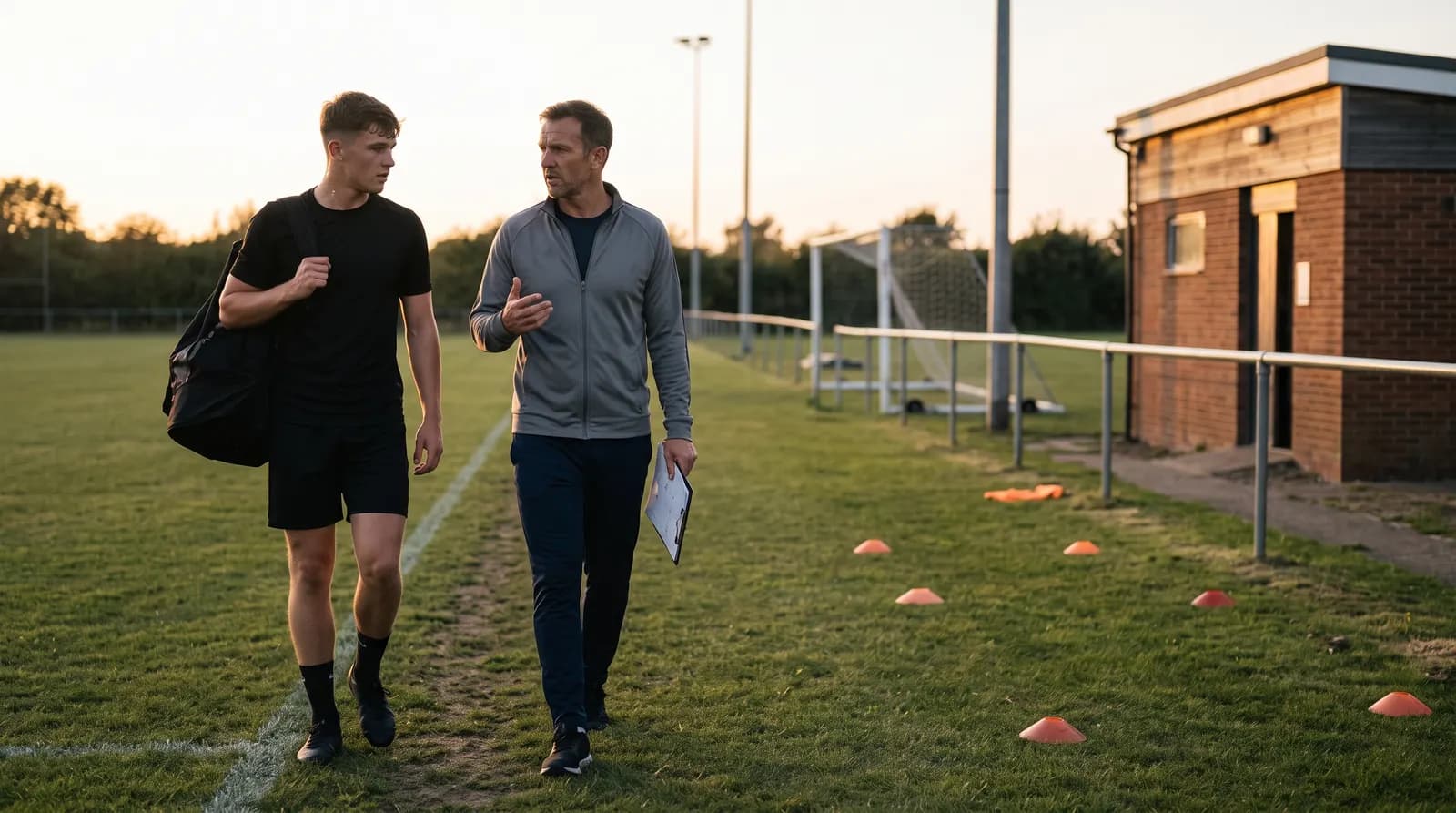
King makes the point sharply: remote programming and remote coaching are not the same thing. A PDF cannot check that the session was done, how hard it felt, or whether the player understood why. That gap is the whole argument for online coaching.
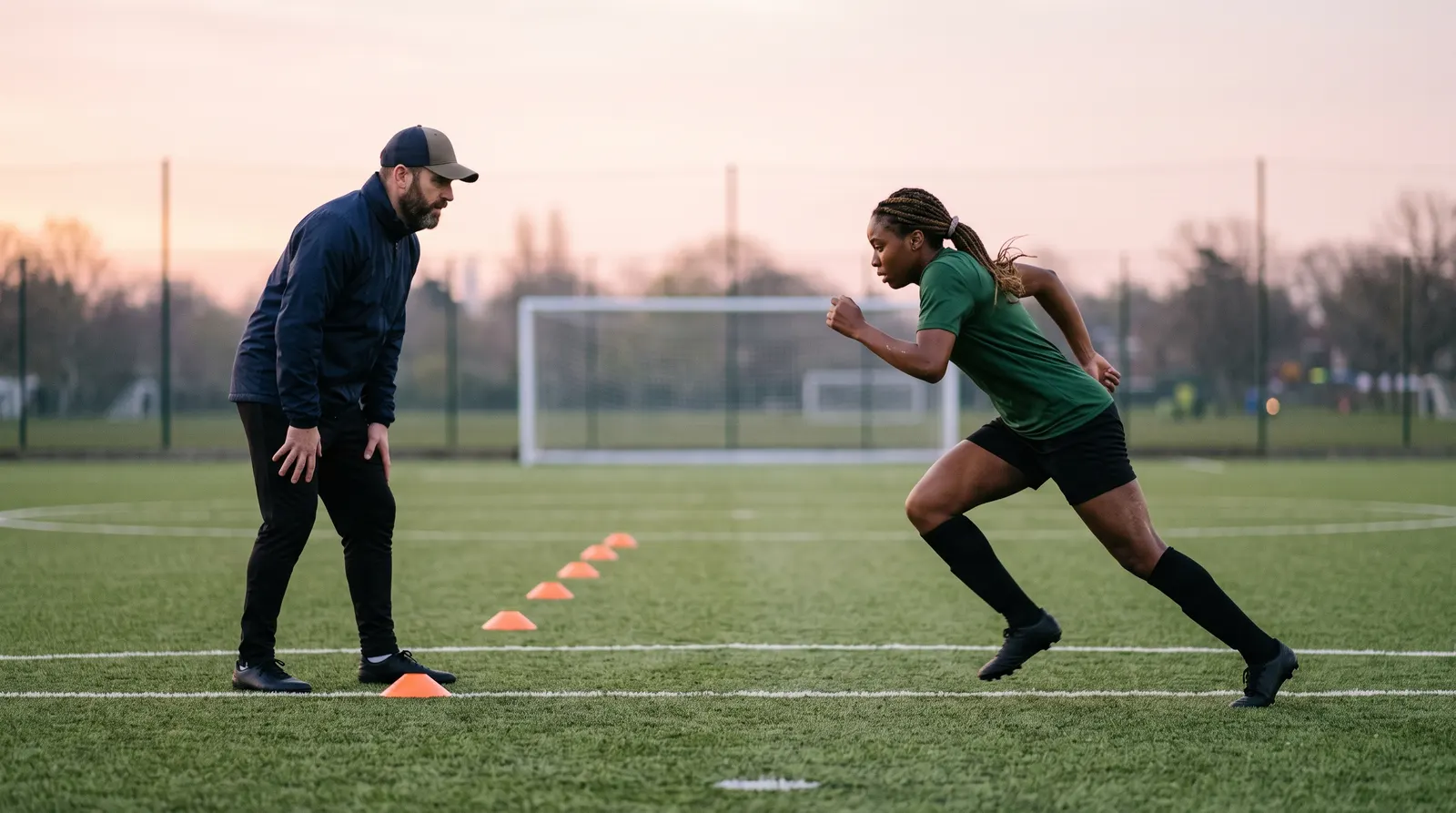
Remote coaching, done properly, has four parts: a plan built for that player's position, history and window; a way to log what was actually done; a daily read of how the player feels (sleep, soreness, energy); and a coach who adjusts the next session from that feedback. In PlayerPlan the player opens a link, no login, sees today's session, and logs sets, RPE and a quick wellness check. The coach sees it the same day.
One honest limit. Online coaching cannot hand you a pitch or GPS data. Treadmills and bike intervals don't replicate the accelerations, decelerations and changes of direction of football, so any plan needs grass, even if that is a park.
A window plan a non-called-up player can run
This is an example for a midfielder with 16 free days and a club that resumes full training right after. Adjust to your history and ask your club's staff first.
- Week 1, two gym sessions (e.g. Monday and Thursday): trap-bar deadlift or squat 4 x 5 at RPE 7, Nordic hamstring curl 3 x 5, split squat 3 x 6 per leg, loaded carry 3 x 30 m. Rest 2 to 3 minutes on the main lift. Leave 2 reps in reserve.
- One repeated-sprint or high-intensity run on grass: 3 x 12 minutes at 80 to 90% of max heart rate with 3 minutes between sets, in line with what held fitness in Joo's study.
- One skills block: the weak foot, first touch under pressure, whatever the season never left time for.
- Week 2: same structure, gym volume cut by roughly a third, and a first sprint exposure at 90% effort, building toward match speed.
- The 10 to 14 days after: rejoin club training with a plan for the first fortnight, not a plan for the first morning.
Everything is progressed from what the player logged, not from what was planned.
The takeaway
The international window in football is a rare block of time. National teams will fill it with matches, clubs with staff will fill it with plans, and the rest are left alone with it. If you are a player in that last group, the cheapest upgrade you can make is not a new gym. It is a coach who sees what you actually did.
For players: Mario Jovanovic runs MJ Perform, remote and in-person strength and conditioning for footballers, built on PlayerPlan. If you want a plan for the next break and the two weeks after it, book a free call or see the MJ Perform coach profile.
For coaches: the same tool runs your own roster. Build the window plan once, share one link per player, and see what each of them actually did. Try PlayerPlan free for 30 days.
FAQ
How long is the international window in football?
The September and October windows were merged for 2026 into a single block of 16 days, from 21 September to 6 October, with national teams allowed up to four matches. Competitions such as the Nations League and African qualifiers also fall inside it.
Do players who aren't called up lose fitness during the international break?
They can. In semi-professional soccer players, two weeks without training reduced Yo-Yo IR2 and repeated-sprint performance (Joo, 2018). Lower-volume, high-intensity work held fitness, so a short, well-structured plan is better than rest or random maintenance.
Is online football coaching enough on its own?
For strength, conditioning and load management, yes, if the coach receives logs and feedback and adjusts the plan. It cannot replace pitch access or team tactics, so the plan should include grass sessions.
What should a player do after international duty?
Treat the next two weeks as the real return: a gradual rise in volume and intensity toward the club schedule, a daily wellness check, and extra recovery after long-haul or eastward travel. A sudden jump to full load is the risk, whether the player did too much or too little during the window.
Ready to ditch the spreadsheets?
Session building, periodization, load monitoring and no-login player sharing — built for football S&C coaches.
Start your free 30-day trialPro features, AI included. No credit card.